

Which Factors Make a Steel Structure Bridge Reliable?
2026-11-12
Article Summary: A steel structure bridge is an important infrastructure solution for road transportation, railway networks, pedestrian access, and industrial applications. Its performance depends on more than the strength of the steel itself. Structural design, load distribution, material selection, fabrication accuracy, corrosion protection, connection quality, and construction planning all influence the bridge's safety, durability, and long-term operating costs.
This guide explores the major factors that engineers, project developers, contractors, and procurement professionals should evaluate when planning a steel bridge project. It also explains different bridge structures, their practical applications, common engineering challenges, and maintenance considerations to help project teams make informed decisions.
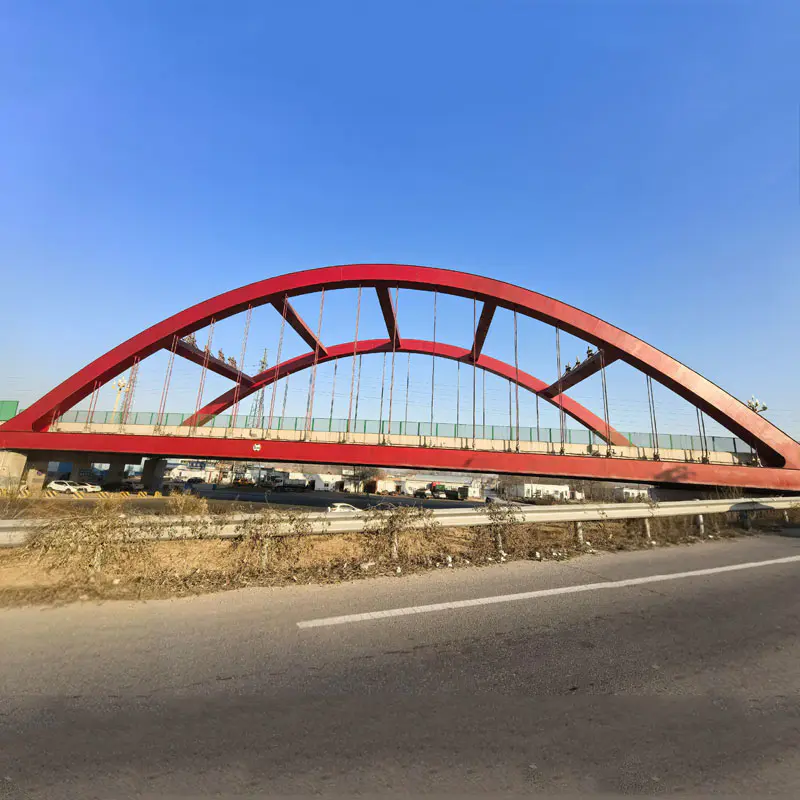
1. Understanding Steel Structure Bridges
A steel structure bridge is a bridge whose primary load-bearing system consists of structural steel members. These members work together to transfer loads from the bridge deck to the supporting piers, abutments, and foundations. Depending on the project requirements, the structure may include steel girders, trusses, arches, cables, cross beams, and other engineered components.
Compared with conventional construction approaches, steel bridge systems offer considerable flexibility in structural configuration. They can be designed for short urban crossings, long-span transportation infrastructure, industrial facilities, and challenging geographical environments.
The basic working principle is straightforward: vehicles, pedestrians, and other applied loads act on the deck and are distributed through the structural system toward the foundations. The engineering challenge is to control stress, deformation, vibration, fatigue, and other potential failure mechanisms throughout the bridge's service life.
Key consideration: A successful steel bridge project must balance structural performance, construction feasibility, environmental conditions, maintenance requirements, and total lifecycle cost rather than focusing on material strength alone.
2. Why Is Steel an Important Bridge Construction Material?
Steel is widely used in bridge engineering because of its favorable mechanical properties and adaptability to different structural designs. When properly selected, fabricated, installed, and maintained, structural steel can provide reliable performance under demanding service conditions.
2.1 High Strength-to-Weight Ratio
Structural steel offers high strength relative to its weight. This makes it possible to design efficient load-bearing systems while managing the dead load imposed on supporting structures and foundations. A lighter superstructure can be especially beneficial where foundation capacity, transportation access, or construction conditions are limited.
2.2 Design Flexibility
Steel members can be manufactured in different shapes, dimensions, and configurations. Engineers can develop girder, truss, arch, and other structural systems according to span requirements, site conditions, architectural expectations, and project budgets.
2.3 Efficient Prefabrication
Many steel bridge components can be fabricated in controlled workshop environments before being transported to the construction site. This approach helps improve dimensional consistency, organize construction activities, and reduce the amount of work required at the site.
2.4 Construction Adaptability
Steel bridge sections can be divided into transportable modules and assembled through bolted or welded connections, subject to the approved engineering design. This can be useful in urban areas, industrial locations, and projects where access to the construction site is restricted.
2.5 Potential for Reuse and Recycling
Steel is a recyclable material. Depending on the structural condition, design, and project requirements, steel components may also offer opportunities for repair, strengthening, modification, or reuse. These characteristics can support more resource-efficient infrastructure planning.
3. Common Types of Steel Structure Bridges
Different bridge configurations are suitable for different spans, loading conditions, site environments, and construction requirements. Understanding the major types helps project owners and engineering teams establish an appropriate structural concept before detailed design begins.
3.1 Steel Girder Bridges
Steel girder bridges use longitudinal steel beams as their primary load-bearing members. They commonly incorporate I-shaped girders, box girders, cross beams, and a bridge deck. Their relatively straightforward structural arrangement makes them suitable for many highway, railway, and urban infrastructure projects.
Steel girder bridges are particularly useful when a project requires a practical structural system with manageable fabrication and erection procedures.
3.2 Steel Truss Bridges
Steel truss bridges consist of interconnected members arranged in triangular patterns. The geometry allows forces to be distributed through tension and compression in individual members. Depending on their configuration, truss bridges can provide efficient structural solutions for medium and long spans.
They are often considered for railway crossings, highway bridges, industrial transportation routes, and projects requiring relatively large unobstructed spaces.
3.3 Steel Arch Bridges
Steel arch bridges use curved structural members to transfer loads primarily through compression toward their supports. Their architectural appearance and structural characteristics make them suitable for selected long-span crossings, urban landmarks, and projects with specific aesthetic requirements.
3.4 Steel Box Girder Bridges
Box girder bridges use closed or partially enclosed box-shaped sections. Their structural configuration provides good torsional resistance, making them useful for curved bridge alignments, elevated roads, and applications where torsional effects are important design considerations.
3.5 Cable-Supported Steel Bridges
Suspension and cable-stayed bridges incorporate steel decks or girders supported by cables and towers. These systems are commonly associated with long-span crossings where conventional girder arrangements would be less practical.
| Bridge Type | Main Structural Feature | Typical Applications | Important Consideration |
|---|---|---|---|
| Steel Girder Bridge | Longitudinal steel beams | Highways and railway crossings | Girder spacing and bending performance |
| Steel Truss Bridge | Triangular interconnected members | Medium and long-span crossings | Member forces and connection design |
| Steel Arch Bridge | Curved compression-based structure | Landmark and large-span bridges | Arch stability and support conditions |
| Steel Box Girder Bridge | Closed box-shaped sections | Curved and elevated roadways | Torsional resistance and internal inspection |
| Cable-Supported Bridge | Cables, towers, and steel deck | Major long-span infrastructure | Cable forces and dynamic behavior |
4. What Are the Key Components of a Steel Structure Bridge?
A steel bridge is an integrated structural system. Each component performs a specific function, and the performance of the complete bridge depends on the coordination of all its elements.
4.1 Main Girders and Trusses
These are the principal load-bearing elements. They carry loads from the bridge deck and distribute them toward the supports. Their dimensions, arrangement, and connection details are determined through structural calculations.
4.2 Bridge Deck
The deck provides the usable surface for vehicles, pedestrians, or railway traffic. Depending on the project, it may consist of a reinforced concrete slab, steel deck plates, composite construction, or another engineered system.
4.3 Cross Beams and Bracing Systems
Cross beams distribute loads between longitudinal members, while bracing systems improve overall stability and help resist lateral forces. They are particularly important in controlling structural movement and maintaining the intended geometry.
4.4 Bearings and Expansion Joints
Bearings transfer forces between the superstructure and substructure while accommodating the movements specified in the design. Expansion joints help manage movement caused by temperature changes, shrinkage, and other factors.
4.5 Piers, Abutments, and Foundations
These supporting structures transfer bridge loads into the ground. Their design must consider soil conditions, water levels, settlement, seismic effects where applicable, and the loads imposed by the complete bridge system.
5. Which Factors Are Essential in Steel Bridge Design?
Bridge design involves more than determining the dimensions of steel members. Engineers must evaluate the full range of forces, environmental influences, construction conditions, and long-term service requirements that may affect the structure.
5.1 Load Requirements
Accurate load assessment is fundamental to structural safety. Depending on the bridge application, design considerations may include:
- Dead loads: The self-weight of structural members, deck systems, surfacing, and permanent equipment.
- Live loads: Vehicles, pedestrians, railway traffic, and other moving loads.
- Wind loads: Wind pressure and aerodynamic effects acting on the bridge structure.
- Temperature effects: Expansion, contraction, and temperature gradients within structural members.
- Seismic loads: Earthquake-related forces where required by the project location and applicable standards.
- Fatigue effects: Repeated stress cycles caused by traffic and other recurring loads.
5.2 Span Length and Structural Configuration
The required span affects the selection of the structural system, member dimensions, support arrangement, and erection method. A short-span crossing may be efficiently served by a girder bridge, while a longer crossing may require a truss, arch, or cable-supported solution.
5.3 Deflection and Vibration Control
A bridge must meet applicable serviceability requirements, not just strength requirements. Excessive deflection can affect deck performance, drainage, and user comfort. Vibration and dynamic response should also be evaluated, especially for pedestrian bridges and structures exposed to repeated moving loads.
5.4 Fatigue and Connection Design
Repeated traffic loads can produce stress cycles in steel members and connections. Welded details, bolted joints, changes in section geometry, and other stress concentrations require careful evaluation. Appropriate detailing and fabrication quality are essential for controlling fatigue-related risks.
5.5 Applicable Design Standards
Bridge design should follow the codes and specifications applicable to the project location and intended use. Depending on the jurisdiction and project requirements, these may include AASHTO specifications, Eurocodes, or relevant national bridge design standards.
Engineering reminder: Design loads, safety factors, deflection limits, fatigue requirements, and connection details should be determined by qualified bridge engineers using the applicable project specifications. Generic dimensions should never replace project-specific calculations.
6. How to Select Suitable Steel Materials for Bridge Construction
Material selection has a direct influence on structural strength, fabrication performance, corrosion resistance, and maintenance requirements. The best steel grade is not necessarily the one with the highest strength. It must be suitable for the actual loading conditions, environmental exposure, fabrication process, and applicable design specifications.
6.1 Evaluate Mechanical Properties
Important mechanical properties include yield strength, tensile strength, ductility, toughness, and fatigue performance. Engineers should confirm that the selected material satisfies the requirements of the structural design and the expected operating environment.
6.2 Consider Environmental Exposure
Bridges located near coastal areas, industrial facilities, humid regions, or chemically aggressive environments may require additional attention to material selection and protective coating systems.
6.3 Check Material Traceability
Reliable material documentation helps project teams verify that the supplied steel matches the specified grade and technical requirements. Procurement documents may include mill test certificates, material identification records, and inspection documentation as required by the contract.
6.4 Compare Common Material Considerations
| Material Consideration | What to Evaluate | Why It Matters |
|---|---|---|
| Yield Strength | Specified minimum yield strength | Determines resistance to permanent deformation |
| Toughness | Impact performance at relevant temperatures | Helps evaluate brittle fracture risks |
| Weldability | Chemical composition and welding procedures | Supports reliable fabrication and connections |
| Corrosion Resistance | Exposure conditions and protective systems | Influences durability and maintenance needs |
| Material Traceability | Certificates and identification records | Improves quality documentation and verification |
7. Steel Bridge Fabrication and Quality Control
Even a well-designed bridge can experience problems if its components are not fabricated accurately. Workshop quality control is therefore an important part of the complete project process.
7.1 Cutting and Preparation
Steel plates and sections must be cut according to approved fabrication drawings. Accurate cutting and edge preparation help maintain dimensional consistency and provide suitable conditions for subsequent assembly and welding.
7.2 Assembly and Welding
Fabricators must follow approved welding procedures and applicable quality requirements. Welding personnel should have the qualifications required by the project specifications. Preheating, heat input, welding sequence, and distortion control may all need to be considered.
7.3 Dimensional Inspection
Fabricated components should be checked against approved drawings and tolerances. Important inspection points may include member length, hole position, flange alignment, web dimensions, camber, and overall assembly geometry.
7.4 Non-Destructive Testing
Depending on the design and inspection plan, non-destructive testing may be required to evaluate weld quality. Common methods include:
- Visual Testing (VT): Examines visible weld conditions and surface appearance.
- Ultrasonic Testing (UT): Uses sound waves to identify internal discontinuities in suitable materials and weld configurations.
- Radiographic Testing (RT): Uses radiation-based imaging to examine certain internal weld conditions.
- Magnetic Particle Testing (MT): Detects surface and near-surface discontinuities in suitable ferromagnetic materials.
- Liquid Penetrant Testing (PT): Identifies surface-breaking discontinuities in suitable nonporous materials.
The required inspection method, coverage, acceptance criteria, and inspection frequency should be specified by the project quality plan and applicable standards.
7.5 Trial Assembly and Documentation
For projects involving complex or large fabricated sections, trial assembly can help identify dimensional or connection issues before transportation. Inspection reports, material certificates, welding records, and non-destructive testing results should be organized for project handover.
8. How Can Corrosion Protection Improve Bridge Durability?
Corrosion is one of the major long-term challenges for steel bridges. Moisture, oxygen, salt, industrial pollutants, and damaged protective coatings can accelerate steel deterioration. Without an appropriate protection strategy, corrosion may reduce the effective cross-section of structural members and increase maintenance costs.
8.1 Protective Coating Systems
Protective paint systems are widely used to create a barrier between the steel surface and the surrounding environment. A typical coating system may include surface preparation, a primer, intermediate coats, and a finishing coat. The specific system should be selected according to exposure conditions and project specifications.
8.2 Hot-Dip Galvanizing
Hot-dip galvanizing applies a zinc coating to suitable steel components. It can provide effective corrosion protection for compatible parts, particularly where the component size, fabrication details, and project specifications allow this treatment.
8.3 Drainage and Structural Detailing
Good detailing helps prevent water accumulation and reduces the formation of difficult-to-maintain areas. Designers should pay attention to drainage paths, enclosed spaces, overlapping plates, crevices, and locations where moisture or debris may collect.
8.4 Regular Coating Inspection
Protective systems should be inspected periodically. Scratches, coating breakdown, rust spots, and damage caused by construction or transportation should be evaluated and repaired using approved procedures.
9. Transportation, Installation, and Construction Considerations
Steel bridge construction involves coordination between engineering design, workshop fabrication, logistics, lifting operations, and site installation. A construction strategy should be developed before fabrication is completed.
9.1 Transportation Planning
Large steel components may exceed standard transportation dimensions or weight limits. Project teams should evaluate route restrictions, bridge clearances, road conditions, lifting points, transport vehicles, and local transportation regulations.
9.2 Component Segmentation
Dividing the bridge into transportable sections can simplify logistics and site installation. However, the segmentation plan must consider connection locations, lifting stresses, fabrication limitations, and the structural stability of partially assembled sections.
9.3 Lifting and Erection
Installation may involve cranes, temporary supports, launching systems, or other specialized equipment. Lifting plans should identify the weight and center of gravity of each component, lifting arrangements, temporary bracing, ground conditions, and construction-stage stability requirements.
9.4 On-Site Connections
Bolted and welded connections may be used according to the approved design. Site teams should follow the specified procedures for bolt installation, welding, inspection, alignment, and final acceptance.
9.5 Construction Safety
Bridge erection can involve work at height, heavy lifting, temporary structures, and traffic management. A project-specific safety plan should address risk assessment, exclusion zones, equipment inspection, personnel qualifications, weather conditions, and emergency procedures.
10. Inspection and Maintenance Strategies for Steel Bridges
Long-term bridge performance depends on regular inspection and timely maintenance. A maintenance plan should be established based on bridge type, operating environment, traffic conditions, structural details, and applicable inspection requirements.
10.1 Routine Visual Inspections
Routine inspections help identify visible problems such as coating damage, corrosion, water leakage, loose components, debris accumulation, and damaged expansion joints.
10.2 Structural Condition Assessment
More detailed inspections may be needed to evaluate fatigue cracks, deformation, connection conditions, section loss, bearing performance, and other structural concerns. Qualified inspectors should use appropriate testing methods when visual examination is insufficient.
10.3 Maintenance of Critical Components
Bearings, expansion joints, drainage systems, protective coatings, and connections may require different maintenance procedures. Their condition should be evaluated in relation to the bridge's operating environment and maintenance history.
10.4 Digital Monitoring Technologies
For selected infrastructure projects, structural health monitoring systems can collect information about strain, vibration, displacement, temperature, and other relevant parameters. These systems can support condition assessment and maintenance planning, although they do not replace required physical inspections.
Maintenance tip: Keeping organized inspection records, repair histories, coating information, and structural monitoring data makes it easier to identify recurring problems and plan maintenance before minor issues become more serious.
11. Common Steel Bridge Project Challenges and Practical Solutions
Steel bridge projects often involve complex coordination between designers, manufacturers, contractors, suppliers, and infrastructure owners. Understanding common project risks can help prevent unnecessary delays and additional costs.
| Common Challenge | Potential Impact | Practical Solution |
|---|---|---|
| Inaccurate structural design information | Fabrication errors and redesign | Confirm approved drawings and technical specifications before production |
| Inconsistent material quality | Uncertain structural performance | Require material certificates and traceability records |
| Welding defects | Connection problems and repair costs | Use approved welding procedures and appropriate inspection |
| Poor corrosion protection | Premature coating deterioration | Specify suitable surface preparation and coating systems |
| Transportation restrictions | Delivery delays and increased logistics costs | Plan component dimensions and transportation routes early |
| Insufficient installation planning | Site delays and safety risks | Prepare detailed erection and lifting plans |
| Inadequate maintenance planning | Higher long-term repair costs | Establish inspection and maintenance schedules |
12. Where Are Steel Structure Bridges Commonly Used?
The adaptability of structural steel makes it suitable for a wide range of infrastructure applications. The final structural arrangement depends on the required load capacity, span, environment, construction access, and intended use.
12.1 Highway and Road Bridges
Steel bridges are used in highway networks, road overpasses, urban transportation systems, and crossings over rivers or other transportation corridors. Their structural flexibility supports different span arrangements and roadway configurations.
12.2 Railway Bridges
Railway bridges must accommodate substantial repeated loads and specific requirements for track alignment, vibration, deflection, and fatigue resistance. Steel girders and truss systems are among the structural options used in railway infrastructure.
12.3 Pedestrian Bridges
Steel pedestrian bridges provide access across roads, rivers, railways, and other obstacles. Their design must consider pedestrian loading, accessibility, vibration comfort, safety barriers, and architectural requirements.
12.4 Industrial Bridges and Plant Access Structures
Industrial facilities may require steel bridges for internal transportation, equipment access, pipeline crossings, maintenance platforms, and connections between different operational areas.
12.5 Temporary and Modular Bridges
Prefabricated steel bridge systems can be useful for temporary crossings, emergency access, construction projects, and locations where rapid installation is important. Their design must still satisfy the required load capacity, stability, and safety specifications.
13. How to Evaluate a Reliable Steel Structure Bridge Manufacturer
Selecting the right manufacturer is an important decision for infrastructure developers, engineering contractors, and procurement teams. A supplier should be evaluated not only by its quoted price but also by its ability to meet technical specifications, manage fabrication quality, and support project coordination.
13.1 Engineering and Technical Capabilities
Evaluate whether the manufacturer can understand project drawings, technical requirements, connection details, fabrication tolerances, and relevant material specifications. For complex projects, clear coordination with the project engineering team is essential.
13.2 Manufacturing Equipment and Production Capacity
Review the supplier's fabrication facilities, cutting equipment, welding capabilities, assembly areas, and available inspection resources. Production capacity should be evaluated against the project schedule and component complexity.
13.3 Quality Management and Inspection
Ask about material traceability, welding quality control, dimensional inspection, coating procedures, and testing documentation. Relevant quality certifications and project-specific inspection records should be verified rather than assumed.
13.4 Customization and Project Coordination
Different bridge projects have different structural requirements. A capable supplier should be able to coordinate custom dimensions, component segmentation, connection details, surface treatment, and packaging according to approved project documents.
13.5 Delivery and After-Sales Support
Delivery planning should include production schedules, inspection milestones, packing methods, export documentation where applicable, and transportation arrangements. Clear communication throughout the project can reduce misunderstandings and help maintain delivery progress.
13.6 Questions to Ask Before Placing an Order
- Can the manufacturer produce components according to our approved drawings?
- Which structural steel grades and material specifications can be supplied?
- What welding procedures and inspection methods are available?
- Can the supplier provide material certificates and quality inspection records?
- What surface preparation and corrosion protection options are available?
- Can the components be manufactured in transportable sections?
- What are the estimated production and delivery lead times?
- What technical documentation and project support are included?
For procurement professionals, obtaining clear answers to these questions before production begins can help reduce technical uncertainty, improve supplier coordination, and support better project cost control.
14. Frequently Asked Questions About Steel Structure Bridges
Q1. What is a steel structure bridge?
A steel structure bridge is a bridge that uses structural steel as its primary load-bearing material. Its main components may include girders, trusses, arches, box sections, bracing systems, and steel connections. It can be used in highway, railway, pedestrian, and industrial infrastructure projects.
Q2. What are the main advantages of steel structure bridges?
Key advantages include a high strength-to-weight ratio, design flexibility, prefabrication potential, adaptability to different spans, and opportunities for repair and recycling. Actual project benefits depend on structural design, environmental exposure, fabrication quality, and maintenance requirements.
Q3. How long can a steel structure bridge last?
The service life depends on the design standard, material selection, construction quality, traffic loading, environmental exposure, corrosion protection, and maintenance. A properly designed and maintained steel bridge can serve for many decades, but its actual design life must be established by the project requirements.
Q4. Which steel bridge type is suitable for long spans?
Steel truss, arch, box girder, cable-stayed, and suspension bridge systems can all be considered for different long-span applications. The appropriate solution depends on span length, loading, site conditions, structural behavior, construction methods, and project economics.
Q5. Are steel structure bridges suitable for coastal environments?
Yes, steel bridges can be designed for coastal environments. However, salt exposure and high humidity require careful material evaluation, suitable protective coating systems, appropriate structural detailing, and regular corrosion inspections.
Q6. What quality inspections are necessary for steel bridge fabrication?
Typical quality checks include material verification, dimensional inspection, welding procedure control, visual testing, and specified non-destructive testing. The exact inspection scope should follow the approved inspection and test plan, applicable standards, and project specifications.
Q7. Can steel bridges be prefabricated before delivery?
Yes. Many steel bridge components can be manufactured and inspected in a factory before being transported to the construction site. Depending on component size and logistics, the bridge can be divided into modules for transportation and subsequent assembly.
Q8. What information is needed to request a steel bridge quotation?
Useful information includes the bridge application, approximate span, width, required loading capacity, site location, design drawings, applicable standards, material specifications, surface treatment requirements, estimated quantity, and expected delivery schedule. If some information is unavailable, preliminary project details can still help initiate a technical discussion.
Q9. How can maintenance costs be controlled?
Maintenance costs can be managed through appropriate initial design, effective corrosion protection, accessible inspection details, regular condition assessments, timely coating repairs, and planned maintenance of bearings and expansion joints. Lifecycle cost should be considered during the initial project evaluation.
Q10. What should buyers prioritize when selecting a steel bridge supplier?
Buyers should evaluate technical capabilities, material traceability, fabrication quality, welding and inspection procedures, production capacity, delivery arrangements, documentation, and communication. The supplier's ability to meet project-specific requirements is more important than price alone.
15. Conclusion: Building Reliable Infrastructure with Steel Bridge Solutions
A steel structure bridge is a comprehensive engineering solution that combines material performance, structural design, fabrication technology, construction planning, and long-term maintenance. Its success depends on how effectively these elements work together throughout the entire project lifecycle.
For project owners and procurement professionals, the most important considerations include selecting an appropriate structural system, verifying material quality, controlling fabrication accuracy, ensuring reliable connections, implementing corrosion protection, and establishing a practical inspection plan.
Working with a qualified steel structure manufacturer can also help improve communication between engineering, production, and construction teams. By evaluating technical capabilities and project requirements at an early stage, buyers can make more informed decisions and reduce potential project risks.
Looking for a Reliable Steel Structure Partner?
Planning a steel structure bridge project? Beijing Yongcheng Xingye Steel Structure Co., Ltd. welcomes inquiries from engineering contractors, infrastructure developers, project owners, and international procurement teams.
Whether you need customized steel structural components, technical discussions, or project-specific manufacturing solutions, our team is ready to discuss your requirements.
Contact us today to share your project drawings, technical specifications, application requirements, or estimated quantities. Let's discuss a suitable steel structure solution for your next infrastructure project.
Technical Note: This article provides general information about steel bridge engineering. Final structural design, material selection, fabrication, inspection, and installation must comply with the applicable project specifications, engineering codes, and local regulations.