

Is a Flat Pack Container House the Smarter Way to Build Fast Without Sacrificing Quality?
2026-01-05
When I first started exploring modular building solutions for overseas projects, I kept running into the same problem time and again: traditional construction was slow, unpredictable, and far too dependent on local labor conditions. That search eventually led me to Ante, and more importantly to the concept of a Flat Pack Container House. What caught my attention was not just the speed of delivery, but how naturally this solution fit into real-world use cases where budgets, timelines, and logistics all matter at the same time.
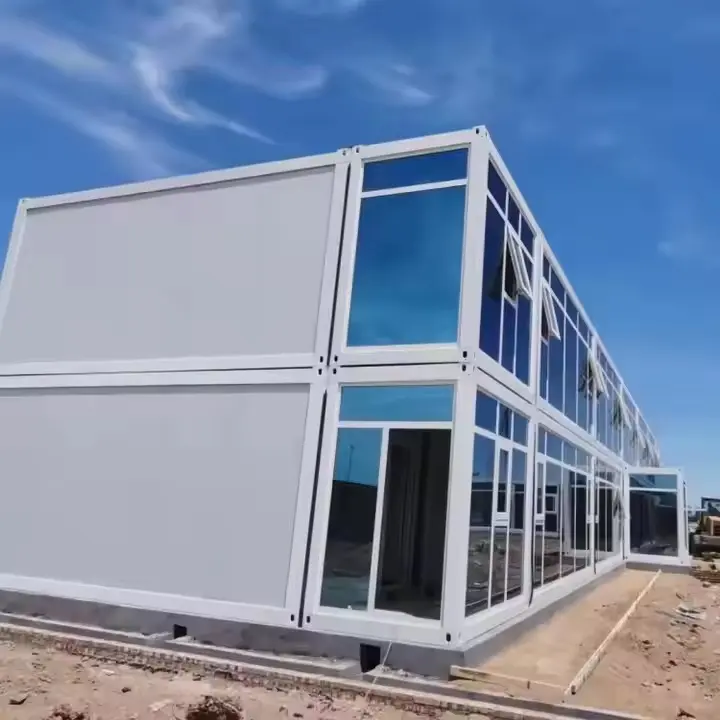
Why Are So Many Developers Asking Whether a Flat Pack Container House Is Truly Practical?
I used to be skeptical myself. A house that arrives in parts sounds convenient, but only if it performs well after installation. What I found is that a well-designed Flat Pack Container House focuses on practicality rather than novelty. Each component is engineered to be packed efficiently, shipped economically, and assembled with minimal tools. This approach directly addresses common pain points like port congestion, rising freight costs, and limited on-site expertise.
- Reduced shipping volume compared with fully assembled units
- Predictable installation timelines even in remote locations
- Lower reliance on highly specialized construction labor
How Does a Flat Pack Container House Help Control Total Project Costs?
From my experience, cost overruns often come from hidden variables rather than material prices alone. A Flat Pack Container House minimizes those variables. Components are produced in a controlled factory environment, which reduces waste and rework. Transport planning becomes simpler, and on-site assembly is easier to schedule accurately.
| Cost Factor | Traditional Construction | Flat Pack Container House |
|---|---|---|
| Material Waste | Often high due to on-site cutting | Low due to factory prefabrication |
| Labor Dependency | Strong reliance on skilled local teams | Reduced with standardized assembly |
| Logistics Predictability | Hard to control | Highly manageable |
Can a Flat Pack Container House Meet Real Living and Working Standards?
This was one of my biggest concerns. Comfort and safety cannot be compromised, especially for long-term use. Modern Flat Pack Container House designs emphasize structural stability, insulation performance, and interior adaptability. Wall panels, roofing systems, and flooring are all selected to meet international standards rather than just temporary shelter requirements.
- Thermal insulation suitable for both hot and cold climates
- Flexible interior layouts for housing, offices, or camps
- Durable steel structures designed for repeated assembly
Why Is Speed Such a Critical Advantage of a Flat Pack Container House?
In many projects I have worked on, speed is not a luxury but a necessity. Delays can mean lost contracts or extended operational downtime. A Flat Pack Container House significantly shortens the gap between planning and occupancy. Once delivered, installation can often be completed in days rather than months, without sacrificing structural integrity.
This speed also creates flexibility. Projects can scale up or down more easily, which is particularly valuable for temporary workforce housing, emergency accommodation, or fast-growing commercial sites.
Is a Flat Pack Container House a Long-Term Solution or Just a Temporary Fix?
It is easy to assume modular housing is only temporary, but that assumption does not hold up anymore. Many Flat Pack Container House projects are designed for repeated relocation or long-term deployment. Maintenance is straightforward, and components can be replaced individually instead of requiring major renovations.
For me, that balance between durability and mobility is what makes this solution stand out. It adapts as project needs change, rather than locking you into a single-use structure.
Ready to Explore Whether a Flat Pack Container House Fits Your Next Project?
If you are dealing with tight schedules, complex logistics, or unpredictable construction environments, it may be time to rethink how buildings are delivered. I believe a Flat Pack Container House offers a practical, scalable alternative that aligns with modern project demands. If you would like to discuss specifications, customization options, or pricing details, please contact us today and send your inquiry. Our team at Ante is ready to help you evaluate the right solution for your needs.