

Tissue Converting Equipment Exporter Checklist for High-Volume Tissue Production
2026-09-19
When tissue production shifts into high-volume territory, the margin for error in converting equipment narrows fast. One overlooked item on an exporter checklist—roll cutting calibration, packaging speed, safety interlocks—can stall entire converting lines and eat into margins. This guide walks through the checks that genuinely matter, with field-tested perspective from DAXIN to help you evaluate suppliers, sidestep costly downtime, and keep output running at full capacity.
Double-Checking Drive Systems Before Shipment Saves Months of Downtime Later
A drive shipped with a loose terminal, an uncalibrated encoder, or a wrong parameter set can turn a routine installation into a week-long troubleshooting session. Technicians at the factory often catch issues that are invisible in the crate: a slightly bent mounting flange, a fan that draws excessive current, or a brake that releases a fraction of a second too late. Running the unit through a full no-load test right before crating, including acceleration and deceleration ramps in both directions, costs less than an hour but can expose problems that would otherwise only appear after the customer has bolted the drive into a production line.
The most common failures stem from small oversights. Checking torque on every power terminal takes a few minutes, yet loose connections remain a top cause of field failures. Verifying that the firmware version matches the order and that all safety parameters are still at factory defaults is equally important, especially when drives are built in batches with shared components. A simple checklist taped to the shipping pallet, initialed by two technicians, has prevented more downtime than any diagnostic software.
Shipping a drive system without this final pass may save half a day in the warehouse, but the return on that shortcut is quickly erased. If a drive fails during first commissioning, the manufacturer pays for freight, replacement parts, and often an engineer on site. Worse, the customer's schedule slips and trust erodes. Spending an extra hour on final verification before the crates are sealed is cheap insurance. It keeps the system from coming back on a truck, and it keeps your installers moving forward instead of waiting for parts.
Why Throughput Numbers on Paper Rarely Match the Converting Floor
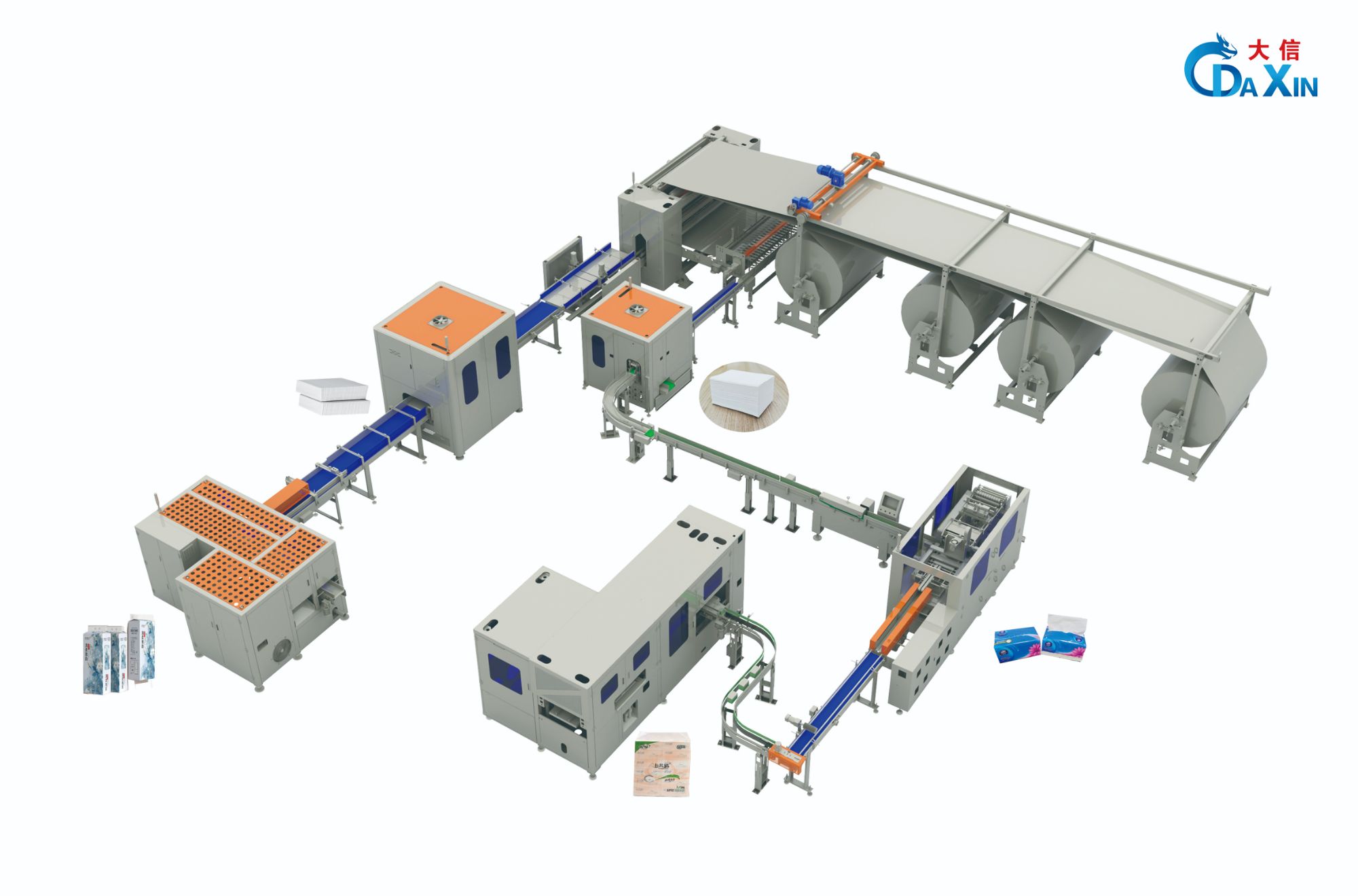
Ask any operator who has spent years running slitting, rewinding, or laminating lines, and they will tell you the same thing: the machine spec sheet says 500 meters per minute, but the actual average shift speed rarely gets within 15 percent of that figure. The gap is not a mystery. It comes from the fact that paper calculations assume a clean, continuous roll of uniform material, no splices, no tension upsets, and a perfectly aligned web. Real converting floors are full of interruptions—core changes, edge trim adjustments, adhesive build-up, and the occasional wrinkle that forces a slowdown just long enough to ruin the math.
Another overlooked factor is the hidden time between "running" and "producing." Throughput on paper often counts only the moments when the line is actually at speed. It ignores acceleration and deceleration ramps, which can eat up ten to fifteen seconds per roll change. Over an eight-hour shift with dozens of roll changes, that adds up to more lost time than most spreadsheets ever show. Add in the variability of operator experience, splice failures during flying transfers, and even the difference in ambient humidity affecting web tension, and the theoretical maximum becomes a distant memory.
Smart managers eventually learn to treat published throughput figures as a starting point, not a promise. The realistic way to narrow the gap is to measure what actually happens on the floor: log every slowdown, classify the reasons, and calculate an overall equipment effectiveness number that includes all the small delays. Once you see where the time truly goes, the conversation changes from blaming the machine to fixing the workflow around it. The machine may be capable of that 500 meters per minute, but the converting operation is only as fast as its slowest recurring hiccup.
Custom Tooling and Roll Widths: Getting the Exporter to Commit in Writing
When you ask an exporter to build custom tooling or run a non-standard roll width, a phone call or a quick email confirmation is not enough. I've seen too many cases where the factory agreed to a 1,250 mm width over the phone, then shipped 1,220 mm because that's what their slitting line was already set up for. The only way to protect yourself is to get a written commitment that spells out the exact width, the tolerance band, and the edge condition—whether it's mill edge, slit edge, or trimmed edge. If the tooling is custom, the written confirmation should also reference the specific drawing number, the material grade it will be used with, and the expected tool life.
Roll width problems usually show up after the material has been cut, coated, or laminated, and by then the cost of rework can wipe out your margin. Ask the exporter to state in writing how they will control width variation across the full length of the coil, not just at the start. Some suppliers will promise a width but ignore that tension changes during slitting can cause the strip to neck down or flare out. A good written commitment will include the measurement method, the frequency of checks, and the acceptable range for camber or waviness. For custom tooling, the same level of detail applies: who owns the tooling, who pays for modifications, and what happens if the tool wears out before the agreed production volume is reached.
The simplest way to get this commitment is to include a technical annex or a confirmation sheet with your purchase order, and require the exporter to sign and stamp it before production begins. Don't accept a generic "will comply with your requirements" statement. Instead, ask them to fill in the specific values for each roll width and each custom tool component, and to confirm that any deviation will require written approval from your side. Keep a copy of every signed document and any email that changes a dimension or tolerance. That paper trail is what turns a vague promise into something you can actually enforce if the goods arrive out of spec.
Electrical Standards and Safety Interlocks That Trip Up Cross-Border Installations
Cross-border electrical work often stumbles on seemingly minor differences in national standards. The same piece of equipment wired to IEC rules may pass an inspection in Germany but fail outright in Canada, where the Canadian Electrical Code governs everything from conductor ampacity to the required number of ground rods. Voltage and frequency mismatches—such as 400/230 V at 50 Hz versus 480/277 V at 60 Hz—are just the start. Even the color coding of wires isn't universal, and assuming otherwise can lead to dangerous misconnections.
Safety interlocks add another layer of trouble. A residual current device built to European standards typically trips at 30 mA, while a North American GFCI is designed to open at 5 mA. An installer who swaps one for the other might inadvertently leave a circuit less protected than the local code demands. Emergency stop circuits and door interlocks on industrial machinery also vary: what counts as a Category 3 safety circuit under ISO 13849 may not satisfy the requirements of NFPA 79 in the United States, even if the hardware looks identical.
The practical fix is to treat every border crossing as a fresh design review. Pull the actual standards for the destination country—don't rely on a previous project in a neighboring region. Check not just the main voltage but also the control voltage, the grounding scheme, and the exact trip settings for every protective device. If possible, have a locally licensed engineer sign off before power is applied. The cost of a rework is trivial compared with a failed inspection or an injury caused by an interlock that never should have been installed that way.
Building a Spare Parts List Around Your Peak Season, Not the Vendor's Default
Most vendor default lists reflect their own inventory cycles, not the months when your equipment actually runs hardest. If you order a standard kit without adjusting for peak demand, you end up overstocked on slow movers and scrambling for critical parts when downtime costs the most. Start by pulling 18 to 24 months of your own work orders and parts consumption around the busy window, not the calendar year. Look for components that fail repeatedly under heat, dust, or extended run times. That history tells you what a generic list will miss.
Build tiers instead of treating every part as equally urgent. Tier one includes items that stop production if they are absent: bearings, belts, filters, and the sensors specific to your line. Tier two covers wear parts with lead times longer than your peak season, so you place orders before supplier delays overlap with your busiest months. Tier three holds items you can source locally within a day. This keeps capital from being tied up in everything while still protecting against the failures that actually stall a shift. Also include parts for planned maintenance scheduled just before peak, because that is when you can replace marginal components without unplanned downtime.
Align reorder points with your peak season calendar rather than a vendor's fiscal quarters. If your busiest stretch runs from June through August, set min/max levels to build inventory from April, and do not accept a default reorder point that assumes steady monthly usage. Review the list with a technician who has worked the last three peak seasons; they often know which parts fail in clusters and which aftermarket substitute holds up. That local knowledge turns a generic parts list into a lean, season-specific buffer.
Test Runs with High-Basis-Weight Tissue That Expose Weak Points Early
Switching to a heavy-grade tissue during trial runs may seem counterintuitive when the final product targets lighter weights, but that extra thickness acts like a stress test for the entire converting line. High-basis-weight sheets put more tension on unwinds, demand sharper creping and embossing precision, and push drying capacity closer to its limit. Any misalignment, worn blade, or uneven coating that hides under standard conditions tends to show up quickly. Operators who run these heavier sheets first often catch nip pressure drift or moisture profile imbalances before they can ruin a full production batch.
The value lies in what the trial reveals about machine response. A high-basis-weight tissue requires more energy to dry, so burner settings, hood temperatures, and Yankee speed all shift. Watching how the sheet reacts across those shifts exposes weak points in control loops and air system design. For example, if edge curl appears only when basis weight climbs, the problem likely stems from uneven drying rather than raw material variability. These early signals let teams adjust calender loading or rebalance the dryer profile before lighter, more fragile grades enter the schedule.
Beyond troubleshooting, this approach creates a reference baseline for future runs. Once the line handles a 30 or 35 gsm sheet consistently, returning to 18 or 20 gsm becomes easier to manage because the weak points are already mapped. Maintenance crews know which bearings heat up, which doctor blades dull fastest, and which sensors drift under load. That knowledge shortens startup curves and reduces the frequency of unplanned stops when the regular product returns to the machine.
FAQ
Start with the core modules: unwind stands, embossing units, and log saws. Confirm they can maintain consistent speeds above 600 meters per minute without vibration or alignment drift.
Test the tension control and web guiding systems with both lightweight and heavier stock. If the machine can switch between 14–45 gsm without wrinkling or tearing, it's ready for high-volume output.
Include at least two sets of embossing rolls, spare blades for the log saw, and a full set of pneumatic seals. Documentation should cover installation drawings, PLC backup files, and a maintenance schedule written for a 24/7 operation.
Verify the main drive motors and servo systems are rated for the destination's voltage and frequency. Also check the emergency stop circuits and safety interlocks under full load—not just in idle mode.
Run a 72-hour continuous trial at the factory, not just a short demo. Track downtime, reject rates, and roll quality every hour. Any recurring jam at the tail sealer or accumulator is a red flag.
Use rust-preventive coating on exposed steel parts, purge all pneumatic lines, and brace the unwind arms with steel brackets. Label each crate with a numbered packing list that matches the installation sequence.
Monitor roll hardness with a durometer, verify perforation strength across different speeds, and check glue application consistency on the core. Even small deviations multiply quickly at high output rates.
It creates a benchmark for installation and commissioning. Photos, measured tolerances, and test data help resolve disputes and speed up the acceptance process, especially for high-volume lines where downtime is costly.
Conclusion
Before signing off on a tissue converting equipment shipment, it pays to look past the polished spec sheet and verify the drive systems under load. A quick bench test might not reveal harmonic vibration or coupling misalignment that only appears at full speed. The hours spent double-checking motor alignment, encoder feedback, and brake response before crating are nothing compared to the line stoppages that follow a cross-border install. Just as important is the gap between theoretical throughput and what actually happens on your floor. Vendor numbers often assume ideal unwind tension, perfect splices, and zero stops—conditions that rarely exist in high-volume production. Ask for a demonstrated run rate with your specific tissue grades, and don't accept a single unverified figure.
Custom tooling and roll width agreements belong in writing, not in a sales conversation. If the exporter promises anvil clearance, embossing depth, or knife positioning for non-standard widths, make those commitments part of the purchase order. The same applies to electrical standards: a machine wired for one region's voltage and grounding scheme can trigger nuisance faults or worse when commissioned elsewhere. Review every interlock and emergency stop circuit against your local code before the container leaves. Spare parts planning should follow your peak season demand, not the vendor's generic list. High-wear items like embossing rolls, doctor blades, and sealing jaws need quantities tied to your actual output calendar. Finally, insist on test runs using high-basis-weight tissue—run it at maximum tension and speed. Weak points in web handling, slitting, and fold quality show up quickly when the stock is heavier, giving you a chance to address them before production starts.
Contact Us
Contact Person: Sam Xie
Email: [email protected]
Tel/WhatsApp: 86-18938538530
Website: https://www.daxin321.com/