

Stainless Steel Lag Bolt Wholesaler: Key Factors for Choosing a Reliable Partner
2026-09-22
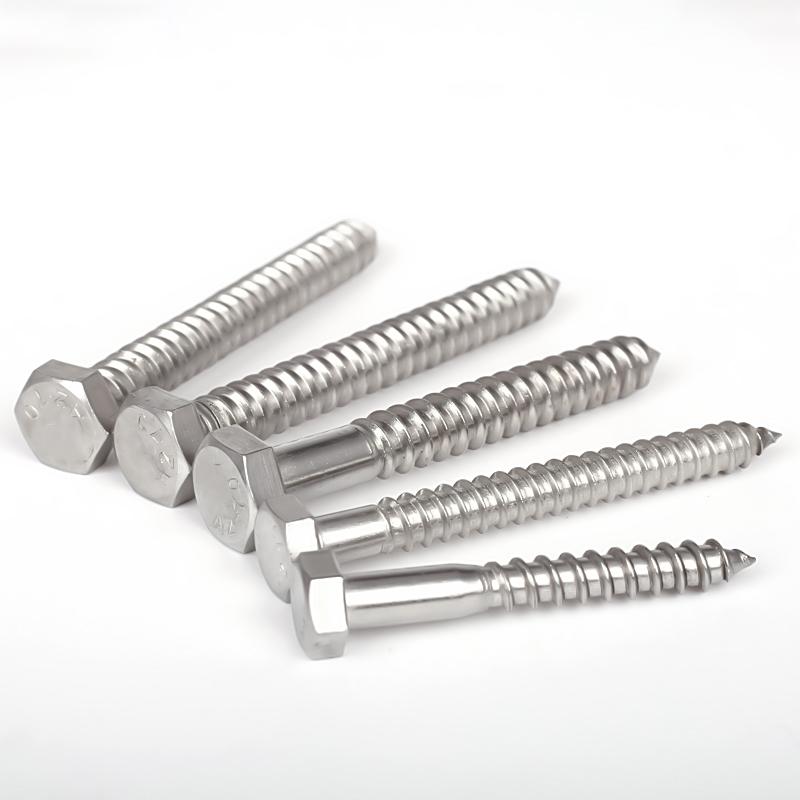
Every procurement manager knows the quiet cost of a weak fastener—corrosion, callbacks, and damaged reputations. When you're sourcing stainless steel lag bolts at volume, the wholesaler you choose becomes an extension of your own quality control. But what separates a dependable supply partner from a costly gamble? Below, we break down the factors that matter most, from material traceability to on-time delivery. And if you're looking for a name that consistently delivers on those fronts, Wanluo is worth a closer look.
Grades and Finishes Worth Trusting
When you specify a grade, you shouldn't have to wonder if the next batch will behave the same way. Our material certifications aren't just paperwork—they come from mills we've audited in person, with test results tied to the exact heat number on your shipment. That means the 316L you ordered isn't a close cousin or a hopeful interpretation. It's the real alloy, traceable to the pour, with mechanical properties verified against published norms.
Surface finish tells you a lot about a supplier before you even put a micrometer on it. We stock finishes from mill-standard 2B to fine brushed and custom polished, but the difference is in the details: uniform grain direction, no chatter marks from over-buffing, and edges that don't look like they were cut with a dull shear. If a sheet arrives with a protective film that peels cleanly and no fingerprint stains underneath, that's not luck—that's a handling standard we enforce at every stage.
Trust doesn't come from a glossy catalog shot. It comes from opening a crate and seeing the same finish you approved on the sample six months ago. That's why we keep retention samples for every lot and encourage customers to request them before production runs. When your supplier can hand you a swatch from the last three shipments and they all match under the same light, you stop worrying about grade drift and start focusing on the project itself.
Stock Levels That Match Real Demand
Inventory that sits too long isn't just idle capital—it's a signal that your demand signals are out of sync. The most effective stock levels aren't built around worst-case scenarios or blanket safety margins; they're shaped by actual purchase rhythms, seasonal shifts, and the subtle patterns hidden in your last twelve months of sales data. When every SKU carries exactly what customers actually pull from the shelf week after week, you stop paying for storage space that earns nothing and start turning stock into a responsive tool rather than a warehouse burden.
Matching stock to real demand means accepting that not all products deserve the same treatment. Fast movers need a buffer that absorbs daily variation without ballooning into excess, while slow movers often perform better with deliberate scarcity and frequent, small replenishments. The trick is to stop guessing and start tracking the gap between forecast and fact—a SKU that consistently sells 20% below its predicted rate is telling you to trim reorder points, not to order more in hopes of a turnaround. Real demand is rarely polite; it fluctuates with weather, promotions, and competitor moves, and your stock levels should flex accordingly.
Getting this right transforms inventory from a static ledger into a living reflection of customer behavior. Instead of relying on gut feel or outdated spreadsheets, you let each product's sales velocity, lead time variability, and margin contribution dictate its own replenishment logic. That might mean holding two weeks of stock for a high-margin accessory that sells steadily, while a bulky seasonal item gets capped at a single week's worth until demand spikes are confirmed. The goal isn't zero库存—it's having exactly the stock that real, current demand will consume, so every square foot of storage and every dollar tied up in goods is working with purpose.
Paperwork and Proof You Don’t Have to Chase
Nobody enjoys filing cabinets stuffed with forms, and the good news is you don’t have to. Many programs now pull your income and identity details straight from existing records, so the old routine of photocopying pay stubs or hunting down a utility bill is quietly disappearing. If you’ve already filed taxes or receive benefits, that paperwork often does the heavy lifting for you.
That means fewer trips to the copy shop and less worry about a missing document derailing your application. Instead of chasing down a signature or a notary stamp, you can focus on the actual purpose of the form. The system is designed to verify you behind the scenes, letting you skip the scavenger hunt.
Still, it’s worth keeping a digital folder of basic items like a photo ID or a recent bank statement. Not because you’ll be asked for them constantly, but because having a backup takes the stress out of the rare moment when a human reviewer does need a second look. In the end, the paperwork you don’t chase frees up time for things that actually matter.
Quotes That Stay Quotes
Some lines refuse to fade. They get passed around, scribbled in margins, tacked onto endings of speeches, but they never lose their edge. What keeps them alive isn't cleverness alone—it's the way they hold a piece of truth that still fits, no matter how many years roll by. People don't repeat them to sound smart; they repeat them because the words do something to the room.
There's a difference between a quote that gets used up and one that stays a quote. The first kind becomes wallpaper—you've heard it so often it means nothing. The second kind stays fresh because it names something you've felt but couldn't say. Marcus Aurelius on the shortness of life, Joan Didion on self-respect, James Baldwin on love and fear—these aren't tired. They're alive each time someone leans in close and says, "Listen to this."
Maybe the real test isn't fame or frequency. It's whether the quote still makes you pause mid-scroll, mid-conversation, mid-thought. If it gives you that small jolt of recognition—then it's earned its place. It stays a quote because it keeps doing its job: reminding you that someone else once stood where you're standing, and found words for it.
Shipping and Handling Without the Headaches
Most shipping headaches start long before the box leaves your hands. The trick is to build a simple system that keeps you from second-guessing every order. Pick two or three trusted carriers instead of chasing the lowest rate each time, and set flat or weight-based fees that actually cover your supplies, labor, and occasional lost package. When the rules are clear from the start, you spend less time answering “where is my stuff?” and more time doing the work you like.
Packing well is another quiet time-saver. Keep a small stock of sturdy boxes, padded mailers, and good tape in one place, and create a five-minute routine: weigh the item, print the label, seal the seams, and snap a quick photo before it goes out. That photo has saved plenty of sellers from vague damage claims. It also helps to batch your drop-offs instead of running to the post office every afternoon, which turns shipping into one predictable errand rather than a daily interruption.
Finally, give customers a realistic picture of delivery times and a link to track their order, so they are not left refreshing their inbox. A short note on your shop page about how you pack and when you ship can prevent most impatient emails. And when something does go wrong, a calm refund or replacement usually costs less than the stress of fighting over a few dollars. Shipping stops being a headache when your process feels boring and repeatable.
A Supplier That Answers After the First Order
Many suppliers chase new customers with quick replies, but disappear once payment clears. This one doesn't. After the first order ships, they still pick up the phone, answer emails within a day, and ask if the packaging held up or if the specs matched. That kind of follow-through is rare.
It's not just about fixing problems. They send photos of production, confirm tracking numbers without being prompted, and remember your preferences for the next run. The first order becomes a working relationship, not a one-off transaction. When you need a tweak two months later, they answer like the conversation never stopped.
FAQ
Look for a partner with multiple production lines or regional warehouses. Ask about their raw material sourcing—if they rely on a single mill, delays hit harder. A good wholesaler will share lead time data and have backup suppliers for 304 and 316 stainless steel.
Request mill test reports (MTRs) for each batch. Reputable wholesalers keep these on file and can provide them without hesitation. You can also spot-check with a magnet—304 and 316 are mostly non-magnetic, though cold working can cause slight attraction.
Poorly cut threads lead to stripping or snapping during installation. Wholesalers focused on structural applications will use rolled threads rather than cut threads, which improves fatigue resistance. Ask for samples and run them into hardwood or a pre-drilled steel plate.
Packaging protects the threads and finish. Loose bulk shipments cause nicks and corrosion spots. Look for wholesalers who use reinforced cartons, sealed bags with desiccants for marine-grade bolts, and clear batch labels for traceability.
Yes, but only if they own their machining or heading equipment. Many distributors just resell standard sizes. Ask about minimum order quantities, tooling costs, and whether they can produce non-standard lengths, pilot point tips, or hex washer heads within your timeline.
Extremely low prices often mean mixed-grade material or thinner plating. A reliable partner quotes based on alloy surcharge plus processing, and they explain price changes when nickel markets shift. Avoid partners who lock prices for unrealistically long periods—they may cut corners later.
ISO 9001 is a baseline. For construction or marine use, look for compliance with ASTM A193 or DIN 571 standards. Some also carry ISO 14001 for environmental management, which indicates a well-run operation.
Send a detailed inquiry with specific sizes, quantities, and destination. Watch how quickly they respond, whether they ask clarifying questions, and if they provide a clear quote with freight terms. A partner who ignores technical details or pushes only standard stock will struggle with custom orders later.
Conclusion
Choosing a stainless steel lag bolt wholesaler goes far beyond finding the lowest unit price. The grades and finishes you stock must match what your customers actually trust in the field—whether that's 304 for general exposure or 316 for coastal and chemical environments. A reliable partner doesn't just advertise these options; they keep enough on the shelf to mirror real demand so you aren't stuck explaining backorders. Just as important is the paperwork. Test reports, material certifications, and traceability documents should arrive with the shipment or be immediately downloadable, not something you spend a week chasing after the pallets land.
On the commercial side, quotes need to stay valid for a reasonable window—price swings are expected in metals, but surprise adjustments between order and invoice erode trust fast. Shipping and handling should feel effortless: proper packaging that prevents thread damage, clear labeling, and carriers who actually deliver on schedule. And the real test of a wholesaler isn't the first order—it's whether they answer the phone, reply to an email, and resolve a mixed lot issue six months later. A partner who treats your repeat business with the same urgency as your first PO is the one worth building a supply chain around.
Contact Us
Contact Person: Shane
Email: [email protected]
Tel/WhatsApp: 8613357785029
Website: https://www.wanluohardware.com