
OEM Boxing Gloves: Custom Manufacturing Solutions for Your Brand
2026-09-16
Every boxing brand dreams of gloves that feel like they were made for their fighters alone. But finding a manufacturer who truly gets your vision? That’s the real bout. Enter PandaWin Sports—where your brand’s gloves go from concept to contender without the usual manufacturing headaches.
Building Gloves That Tell Your Brand's Story from the First Stitch
A glove is rarely the loudest piece in a workwear lineup, but it is often the first thing a customer touches. That first contact carries more weight than most brands realize. Instead of treating gloves as an afterthought, we treat every seam as an opportunity to say something about who you are. From the weight of the leather to the angle of the wrist closure, each decision echoes a different kind of story, whether it is built for the shop floor or the showroom.
The stitching itself becomes a signature. We have seen brands transform a standard double-needle line into a visual rhythm that mirrors their logo, or pull a thread color from the lining of a jacket so the glove feels like part of a larger uniform. These are not expensive custom features reserved for huge orders; they are deliberate choices made early in the design conversation. When the stitch pattern matches the story you want to tell, the glove stops being a commodity and starts working as a quiet ambassador.
What matters most is consistency. A brand story told only on the palm patch falls apart the moment someone notices the cuff snaps feel cheap or the index finger wears through faster than expected. We build gloves to hold that story together over months of use, not just in a product photo. That means selecting hides that age with character, reinforcing stress points without adding bulk, and matching the edge binding to the same tonal language as the stitching. The result is a glove that people recognize before they ever see a logo.
Choosing Padding and Leather That Survive the Heavy Bag
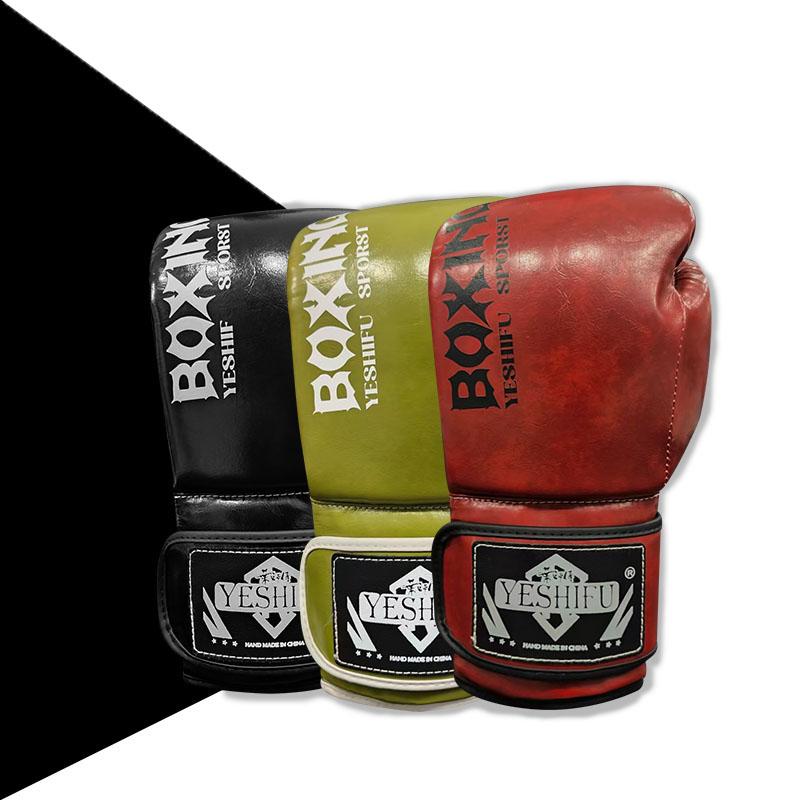
Full-grain steerhide is the workhorse here. It takes scuffs and sweat without peeling the way corrected or bonded leather does, and the tight fiber structure keeps the bag from stretching out of shape after a few thousand strikes. A 1.8 to 2.2 mm thickness hits the sweet spot—enough to resist tearing, still supple enough to absorb shock instead of bouncing it back into your wrists.
Padding choice usually separates bags that last from those that go dead in six months. The best fills use layered foam, dense at the core and slightly softer near the shell, so impact disperses evenly without compacting into a brick. If you can feel the opposite side of the bag when you push in with both hands, the fill is too thin or too loose, and it will settle lower over time.
Stitching and attachment points matter just as much as the materials themselves. Double-row seams along the main stress lines and reinforced end caps keep the padding locked in place, while welded or riveted hanger straps hold up under swing and torque. A small amount of initial stiffness is a good sign—it means the leather and foam haven’t been over-processed to feel soft on day one.
The Craft Behind Every Seam Inside Our Production Lines
Walk onto our production floor and you’ll notice something odd: nobody rushes the first stitch. A new roll of fabric is tested with a scrap piece, checking tension and thread bite before the real seam ever starts. That small habit comes from years of learning how different weaves behave—cotton can shift, denim pulls, a silk blend demands a lighter touch. Our sewers know the difference by feel, adjusting the machine before the needle ever touches the product.
Every seam that leaves a station gets handled twice—once by the operator, who runs a thumb along the stitching to feel for skipped threads or uneven spacing, and again at the next checkpoint under angled light. We keep our needle gauges slightly closer than industry standard, not because it looks better in photos, but because tighter, consistent stitching holds up after repeated washing and hard wear. If a line drifts by even half a millimeter, the piece is pulled and rethreaded before it moves on.
The machinery helps, but it doesn’t replace judgment. Automated cutters and guided feet keep the work steady, yet the final press of the foot pedal, the slight easing of fabric around a curve, the decision to backtack a stress point—those still belong to a person. It’s why our newest operators spend their first month sewing only samples, not production. They learn how a seam should feel under their fingers, not just how it should look. That’s the part nobody puts in a spec sheet.
Making Your Mark Beyond the Logo Custom Touches That Stick
A logo rarely does the heavy lifting people expect. What they remember is the weight of the paper, the sound of a magnetic box snapping shut, or a hand-written note tucked under the product. These unscripted moments turn a purchase into something closer to a conversation.
Small choices carry oversized weight: a wax seal in an unexpected color, a sticker that shifts with the season, or a thank-you card printed on textured cotton stock. None of these shout for attention, but they linger long after the box is opened.
The trick is consistency with a light touch. Too many extras feel desperate; too few feel forgettable. Pick two or three details you can repeat without cutting corners, and let them quietly become your signature.
Testing Every Pair Like Your Reputation Depends on It
When you're checking every pair of variables, you're not just filling a matrix—you're hunting for the one interaction that could slip through and bite you during a client demo. A missed combination isn't a minor oversight; it's the kind of defect that surfaces in production, and then everyone remembers who signed off on the test plan.
Build the matrix, but don't trust it blindly. Prioritize the high-risk pairs: payment methods against currencies, old browser versions against authentication flows, user roles against data visibility. Walk through each pair like a detective cross-examining a suspect. Ask what happens when both values hit an edge at the same time. That's where the nasty bugs tend to hide.
Reputation isn't built on the tests you skip. It's built on the pairs you refuse to leave untested even when the deadline is breathing down your neck. Treat every pair as a potential career-defining moment. You're not being paranoid—you're just professional enough to know that one broken combination can undo months of trust.
From Sketch to Shipping How We Bring Your Glove Line to Life
Every glove line we produce starts with a rough pencil sketch, sometimes on a pattern card, sometimes on the back of a work order after a long fitting session. Our pattern team turns those lines into a working spec, fussing over palm width, finger length, and gusset placement until the fit stops feeling like a generic template. The first sample is cut from the exact leather or technical fabric we'll use in production, not a stand-in, so the prototype doesn't lie about the final feel.
After that sample survives our wear-test gauntlet—grip drills, flex cycles, repeated on/off abuse—it goes into a short production run. Every pair gets checked at three stages: after cutting, after stitching, and again after the final turn-and-press. Then it's packed and shipped with batch numbers tied to each operator who worked on it. If a reorder ever feels slightly different, we can trace it straight back to the bench.
FAQ
It starts with a conversation about your target market and performance goals, then moves into sampling based on your specs—weight, leather type, padding density, closure system. You get a dedicated point of contact who coordinates pattern making, prototyping, and revisions until the glove feels right for your brand.
Focus on the outer shell first: genuine cowhide leather gives durability and a classic break-in, while microfiber or PU offers a vegan-friendly, lower-cost alternative. For the inner lining, moisture-wicking nylon keeps hands cooler, and the padding can range from layered foam for training to horsehair blends for a compact, fight-ready feel.
You can control every visible surface—embossed or printed logos, woven labels, color blocking on the backhand, thumb, and cuff, plus custom piping or stitching patterns. Beyond looks, you can adjust the finger compartment depth, palm grip bar, and wrist strap style to match your brand's fit philosophy.
Most factories work with a starting volume around 100 to 300 pairs per colorway, depending on the complexity of your design and whether you need custom molds. If you're testing the market, some workshops offer a limited pilot run with shared tooling, but the per-unit price will be higher.
Expect roughly 45 to 75 days from signing off on the final sample to having the gloves ready to ship, assuming no major design changes. The sampling phase alone can take three to four weeks, especially if you're tweaking padding or embroidery placement across multiple rounds.
Yes, and this is where OEM work really differs from white-labeling. You can specify foam density, layered construction like IMF or EVA, or even a hybrid horsehair-foam core for a pro-style impact profile. For wrist support, you can choose between a segmented foam cuff, a lace-up closure, or a longer hook-and-loop strap with an internal grip tab.
We build a sealed reference sample and a detailed spec sheet that stays with your order, then run inline checks at cutting, stitching, and filling stages. Each batch is tested for weight tolerance, seam strength, and leather thickness before packing, so the gloves from month six feel the same as those from month one.
Beyond the per-pair unit price, factor in custom mold fees for logos or padding shapes, sample shipping charges, and possible import duties on the final shipment. Also keep a buffer for last-minute color or material swaps, since those can trigger a new sampling round and delay the timeline.
Conclusion
Every glove starts as a conversation about what your brand should feel like in someone's hands, not as a blank catalog order. We shape the pattern, stitch density, and leather grain so that the first time a customer laces up, the product already tells your story. Padding choices are driven by how fighters actually train: dense closed-cell foam sits over the knuckles for heavy bag rounds, while softer layered latex near the palm keeps sparring comfortable. The leather is selected for abrasion resistance and a consistent break-in, so it won't crack or turn sloppy after a few weeks. On the production floor, cutting dies and seam allowances are tuned by hand, with line leads checking each section before it moves forward. That focus on the inside construction is why our gloves hold their shape and avoid the blown seams that plague rushed OEM work.
Custom details go beyond a printed logo. You can adjust the thumb angle, add contrast piping, choose a tighter or looser wrist closure, and pick lining materials that wick moisture differently. Every production run gets tested like your reputation depends on it: samples are dropped, flexed, and struck against bags to simulate months of use in a few days. Pairs that show uneven padding or loose stitching are pulled and reworked, not shipped. From the first pencil sketch to final carton sealing, your glove line passes through a single pipeline with clear approval gates. You see the same prototypes, the same pre-production sample, and the same quality bar at every step, so what lands in your warehouse is exactly what you promised your customers.
Contact Us
Contact Person: Fei Xu
Email: [email protected]
Tel/WhatsApp: +8618631245578
Website: https://www.pandawinsports.com/