

OEM 3-in-1 Filling Machine Enhances Packaging Efficiency
2026-10-18
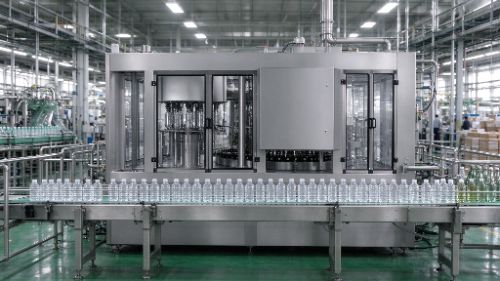
Most packaging inefficiencies trace back to one overlooked step: filling. That’s exactly where Wanying Machinery has focused its latest OEM solution—a 3-in-1 filling machine that washes, fills, and caps in one pass, directly tackling packaging efficiency. The result isn’t just faster throughput; it’s a quieter, more predictable packaging floor. Here’s what makes this machine different from the usual retrofit options.
One Machine, Three Jobs: Why Your Line Needs Fewer Footprints
Floor space is one of those costs that rarely shows up as a line item until you run out of it. Every standalone unit in a process—forming, trimming, assembly—pulls its own footprint, plus clearance for operators, material staging, and maintenance access. When one machine absorbs three distinct jobs, that physical sprawl shrinks fast, and the savings go beyond square meters.
A combined station changes how people move around the line. Instead of walking parts from press to punch to packaging, crews work from a single load point and let the machine cycle through operations in sequence. Fewer machines also mean fewer conveyors, fewer guarding panels, fewer electrical drops, and less floor marking to keep updated. The result is a tighter cell that still leaves room for forks and carts to get through.
There is a flexibility angle too. When new product variants arrive, a one-machine, three-job layout is far easier to reconfigure than a chain of dedicated stations. You shift tooling or change a program rather than relocating multiple assets and rebalancing the whole line. Less permanent infrastructure on the floor makes the entire operation more willing to take on short runs or mixed schedules without choking on setup time.
Cutting Changeover Time Without Cutting Corners
Rather than squeezing seconds out of every movement, smart teams treat changeover as a design problem. They map the sequence from last good part to first good part, then separate what truly requires the line stopped from what can happen beforehand or in parallel. This shift in thinking often reveals that half the downtime isn’t unavoidable—it’s just inherited habit.
The trick is to standardize without strangling flexibility. Color-coded carts, preset torque values, and staged tooling at point of use mean operators aren’t hunting or improvising. But nobody gets pressured to skip a calibration check or leave a guard off just to hit a number. When the process is clear and everything is within reach, speed becomes a byproduct of clarity, not a bet against safety.
The real payoff shows up in the data: shorter setups, fewer rushed mistakes, and a team that trusts the routine. That trust matters more than any stopwatch. Once people see that faster changeovers don’t ask them to cut corners, they start spotting waste on their own—and the improvements stick.
Precision Filling That Keeps Pace With Demand
On a busy production line, every second counts. Our filling systems are engineered to deliver repeatable volume accuracy within a fraction of a percent, even when product viscosity shifts or line speeds climb. Instead of forcing operators to watch over manual adjustments, the machine reads flow dynamics in real time and corrects itself mid-run. That means fewer rejected containers, less giveaway, and a dramatically smoother handoff to downstream packaging.
What really sets this apart is the way the platform adapts to demand spikes without losing its footing. A quick recipe change—triggered by a barcode scan or a tap on the HMI—recalibrates fill volumes, nozzle dwell, and anti-drip settings in under ten seconds. You can swing from a slow-moving cream to a thin, foamy liquid on the same line with zero mechanical swap-outs. This agility keeps throughput high when orders come in waves, not just in a steady trickle.
Maintenance teams often notice the difference first: fewer worn valves, fewer clean-in-place interruptions, and a fill history log that makes traceability effortless. Because the system stores every fill profile and performance metric, you can compare shifts, spot drift early, and schedule service based on actual wear rather than a calendar. The result is a filling operation that feels less like a bottleneck and more like the quiet, reliable heartbeat of your plant.
How Modular Design Turns Downtime Into Uptime
When a critical subsystem fails in a traditional monolithic setup, the whole operation often grinds to a halt. Modular design changes that equation by isolating functions into self-contained units that can be swapped or rerouted independently. A power supply module in a data center rack, for example, can be replaced while the servers keep running, because each module carries its own redundancy and disconnect points. That kind of fault containment is what turns a potential outage into a brief, routine service event.
The real advantage shows up in planned maintenance. Instead of shutting down an entire production line to inspect one section, technicians can pull a single module, test it on the bench, and slot in a spare—often in under fifteen minutes. Because interfaces between modules are standardized, there’s no need to trace wiring or reverse-engineer a custom integration. This also means older modules can be upgraded one at a time, so the system never needs a wholesale shutdown for a refresh.
Uptime gains come from more than just quick swaps. Modular systems encourage better monitoring, since each unit can report its own health and predict wear before failure. When a module does degrade, the blast radius stays small. The result is fewer cascading failures and a maintenance schedule driven by actual component condition rather than calendar guesses. That’s how smart partitioning turns downtime from a costly event into something closer to a non-event.
Small Footprint, Big Throughput: A Closer Look
It’s easy to assume that pushing more packets per second demands larger chassis, additional line cards, and more rack space. However, a handful of recent hardware releases contradict that logic on purpose. By reworking the data path at the silicon level—merging what used to be separate NPUs, switching fabrics, and traffic managers into a single package—vendors have managed to shrink the physical footprint while increasing throughput. The result is a device that fits on a shelf but handles workloads that once required a full-depth appliance.
Cooling and power delivery usually become the limiting factors when density rises. Instead of relying on bulky heatsinks or high-RPM fans, these compact systems lean on advanced packaging and smarter power states. Heat is directed away from hot spots through redesigned internal airflow channels, and dedicated hardware offloads handle encryption, compression, and packet parsing so the main processor isn’t burning cycles on routine tasks. That leaves enough thermal headroom to sustain multi-hundred-gigabit rates in a box you can carry with one hand.
The practical upside shows up in places where space is genuinely scarce. Edge cabinets inside retail stores, manufacturing floors, or branch offices can now host the same forwarding capacity that used to demand a small server room. It also simplifies redundancy: two small units can replace one big chassis, offering failover without doubling the footprint. For network teams, that means less time wrestling with rack layouts and more time delivering capacity where it actually gets used.
From Thin Liquids to Viscous Pastes: No Retooling Required
Many production lines still assume that switching from a water-thin solution to a heavy paste means stopping the line, swapping pumps or mixers, and recalibrating every stage. That assumption is quietly becoming obsolete. A single system can now manage both extremes when the internal geometry is designed around progressive cavity or peristaltic principles, because the same mechanical action that moves a low-viscosity fluid without turbulence also grips a thick, shear-sensitive paste without crushing its structure.
The real difference comes from how the equipment handles shear and residence time. Thin liquids need enough back-pressure to avoid dribbling, while viscous pastes need gentle, continuous displacement to avoid overheating or phase separation. Instead of changing tooling, operators adjust only speed and discharge pressure within the same setup. This removes the usual compromise between clean-in-place convenience for liquids and high-torque capability for pastes.
On the floor, that translates to fewer spare parts, shorter changeover windows, and less risk of cross-contamination when a batch recipe shifts mid-run. The machine becomes less of a fixed asset for one consistency and more of a shared resource across product families.
FAQ
It means the equipment can be branded and configured to match a buyer's own product line or factory requirements, rather than being sold as a fixed off-the-shelf model.
By combining rinsing, filling, and capping into one continuous sequence, the machine eliminates transfer delays between separate stations, so containers move through the line faster and with less handling.
Most models accommodate a range of bottle or jar sizes and materials, including plastic and glass, with quick changeover parts for different neck finishes and heights.
Not usually. The filling nozzles and pump settings can be adjusted for thin liquids like water or thicker products like syrups and lotions, often with recipe storage to recall settings.
Routine cleaning of contact parts, occasional lubrication of moving components, and inspection of seals and capping heads keep it running reliably; many designs feature tool-free disassembly for faster washdowns.
Yes, it is typically designed with adjustable conveyor heights and standard interfaces, so it can be placed upstream or downstream of labelers, coders, or cartoners.
Depending on container size and product, many lines see a noticeable reduction in manual labor and a steadier output rate, often freeing operators for other tasks while reducing spills and rejects.
Custom branding and certain configuration choices may add a short lead time, but reputable suppliers still provide installation guidance, spare parts, and remote troubleshooting after delivery.
Conclusion
Packaging lines often suffer from sprawl—too many machines, too many transfer points, and too much floor space eaten up by single-purpose equipment. The OEM 3-in-1 filling machine flips that logic by combining washing, filling, and capping into one compact unit. This integration directly addresses the “one machine, three jobs” reality: a single frame replaces three separate footprints, freeing square footage for raw materials or finished goods staging. More importantly, the modular design turns what used to be a scheduled rebuild into a quick cartridge swap. When a format change hits, operators can slide out one tooling set and lock in another without recalibrating from scratch. That means changeover time drops from hours to minutes, not by rushing workers but by eliminating the need to realign multiple standalone stations. For contract packagers who juggle thin serums one shift and thick creams the next, the same machine handles both viscosities without retooling—just a recipe switch on the HMI. The result is a line that stays in motion instead of waiting on mechanical adjustments.
Precision filling is where this machine earns its keep under real demand. Servo-driven nozzles follow a closed-loop feedback curve, so fill accuracy stays within tight tolerances even when throughput ramps up to fill hundreds of bottles per minute. That speed doesn’t come from brute force; it comes from a small-footprint layout that shortens the bottle path and reduces dwell time between stations. Downtime, traditionally the hidden tax on efficiency, gets attacked from two sides. First, the modular design means a failed pump or capper head can be swapped out as a pre-tested module, not repaired in place. Second, fewer transfer points mean fewer places for jams, spills, or misalignments to occur. Operators trained on the system report that a full line clear takes under a minute, not ten. For OEMs and brand owners alike, the message is simple: you don’t need a bigger building or a third shift to boost output. You need a filling platform that treats footprint, precision, and flexibility as one engineering challenge—not three separate problems bolted together.
Contact Us
Contact Person: Tyson
Email: [email protected]
Tel/WhatsApp: +8613396971296
Website: https://www.wanyingmachinery.com