
ODM Emergency Kit Manufacturer: How to Choose the Right Partner for Custom Emergency Kits
2026-10-28
Selecting an ODM emergency kit manufacturer is more than a cost decision—it's a risk management move. The right partner must nail compliance, customization, and delivery timelines without constant follow-ups. That's why many brands skip trial-and-error and work with Kebon, a manufacturer known for turning complex custom kits into production-ready products. Here's how to make the same smart choice.
From Logo to Loadout: What Customization Really Means
Customization starts off as a signature, a way to stamp your name on something that wasn't built for you. But a logo on a jersey or a decal on a laptop only scratches the surface. It's the difference between renting a room and rearranging the furniture. Real customization begins when the choices stop being decorative and start being deliberate—when the color of a grip or the angle of a stock changes how you actually move through a space.
A loadout is where that shift becomes tangible. It's not a collection of accessories; it's a set of trade-offs you accept to gain an edge. You might sacrifice speed for stability, or swap a high-capacity magazine for a lighter frame. Those decisions aren't about looking distinct, they're about feeling competent. The best loadouts feel like a second skin because every piece justifies its weight. That's what turns a generic item into an extension of your own judgment.
Customization, then, is less about self-expression and more about self-correction. You tweak, swap, and rebuild until the tool disappears and the task becomes effortless. The logo says who you are; the loadout reveals how you think. One is a mark you leave behind, the other is a method you carry forward. When both align, you're not just using the gear—you're completing a sentence that started long before you picked it up.
Certifications That Matter More Than a Stamp
A certification only earns its keep when it pushes you past surface-level familiarity. The ones that matter aren't the PDF you download after a two-hour video course; they're the credentials that force you to apply what you've learned, to break things and fix them, and to keep proving your knowledge long after the badge is issued.
Industries change faster than most curricula, so the certifications worth your time are the ones with a pulse. Look for programs that update their exams regularly, involve hands-on labs or portfolio reviews, and carry weight among practitioners—not just HR filters. If a cert's main selling point is that it looks good in an email signature, it's probably not doing much else.
That doesn't mean credentials are useless—far from it. But the real value shows up when a certification aligns with the work you already do or the role you're trying to move into. A well-chosen cert becomes a shorthand for "this person has actually done the thing," not just "this person sat through a webinar."
Inside the Factory: How to Spot Quality Before You Commit
Walking a factory floor tells you more in ten minutes than a dozen polished spec sheets. You don't need an engineering degree to notice when raw materials are stacked haphazardly near loading docks, or when workers keep glancing at a supervisor before touching a machine. Real quality lives in the unscripted moments: the worn but organized tool carts, the calibration stickers that haven't expired, the faint smell of cutting oil instead of burnt dust. If the line stops without panic and someone actually inspects a rejected part instead of tossing it back in the bin, that's a sign worth more than any certificate on the wall.
Ask to see the rejection area, not the showroom. Every factory has one, and how they treat their mistakes reveals how they'll treat your order. A shop that hides its scrap or blames suppliers for every flaw is already telling you where your batch will end up when something goes sideways. But if the defect samples are tagged with root causes, dated, and referenced in a morning stand-up, that's a loop that closes. You can also spot quality in the pace of the line: too fast and corners get skipped, too slow and orders pile up in WIP purgatory. The sweet spot is a steady rhythm where each station has just enough time to do the job once, correctly.
Don't just talk to the owner or the sales rep. Pull aside the person running the final inspection or the one sweeping behind the CNC machines. Ask them what happens when they find a bad part at the end of a shift. If they look at the floor and mumble, walk away. If they show you the logbook and point to a recent fix, you've found a place that understands quality isn't a poster slogan but a habit repeated until it becomes muscle memory. That's the factory you want building your product before you sign anything.
Scaling Up Without the Wait: Production Capacity Explained
Production capacity is rarely about owning the most machines. It is the pace at which your processes, people, and materials can actually turn inputs into finished goods without sacrificing quality or burning through cash. When someone asks how much you can produce, the honest answer depends on bottlenecks: a slow drying stage, a single inspection point, or a supplier that delivers in batches rather than continuously.
Scaling up without waiting means preparing those constraints ahead of demand. Instead of ordering another assembly line the moment orders spike, businesses can cross-train operators so a shortage in one area does not stop the rest, keep modular equipment that can be rearranged quickly, or work with suppliers on shorter, more frequent deliveries. These moves expand output before capital-heavy investments are even approved.
It also helps to measure what actually slows you down. Track changeover times between product runs, reject rates at each step, and how often machinery sits idle. Often, a 15-minute tooling adjustment or a simple layout change frees up more weekly output than a new machine would. That is the difference between capacity that exists on paper and capacity you can rely on when orders climb.
The Human Side of ODM: Communication That Keeps Projects on Track
Behind every ODM timeline and specification sheet sits a chain of people making choices, raising doubts, and adjusting course. When those conversations stay open and unhurried, small misunderstandings rarely snowball into delays. A quick call about a material substitution or a candid note on a prototype flaw does more for momentum than any formal status report.
Trust between a client and an ODM team often grows from the quiet moments between milestones. Asking how a supplier’s week is going before diving into a punch list, or remembering a factory engineer’s earlier concern about tooling, turns transactional exchanges into working relationships. That kind of rapport makes it easier to surface bad news early, which is exactly when a project can still be steered back.
The most reliable schedules are held together by people who listen for what isn’t written down. A designer who paraphrases a client’s offhand comment about “feeling sturdy” into a specific tolerance, or a project manager who notices a vendor going quiet and reaches out before the gap widens — these are the human checks that keep a project from drifting. Communication like this doesn’t show up in a Gantt chart, but it’s often the reason the chart still holds.
Beyond the First Shipment: Support That Extends the Partnership
When the last pallet leaves the loading dock, our involvement doesn't wind down. A shipment marks the start of a rhythm—checking in on how materials behave in your process, adjusting lead times before bottlenecks appear, and sharing notes from other lines we've served. That ongoing conversation is what turns a single order into a reliable supply channel.
Practical support includes more than answering calls. We keep a running profile of your usage patterns, flag reorder points ahead of schedule, and offer hands-on guidance for handling or storage quirks that only show up after unpacking. If something shifts on your end—a new spec, a seasonal spike, a packaging change—we adapt with you instead of hiding behind the original invoice.
The result is a partnership that ages well. You are not left to decode product data sheets alone, nor to chase down a rep who only shows up when a quote is pending. Our team stays close enough to notice small friction before it becomes downtime, which means the next shipment is less of a purchase and more of a continuation.
FAQ
Look for a partner that handles more than just assembly. A solid ODM shop will have in-house sewing, sealing, and printing equipment, plus experience with component sourcing for items like bandages, tools, and thermal blankets. Ask to see their production line layout or a video walkthrough so you can gauge whether they manage multi-SKU kitting without constant bottlenecks.
Request third-party audit reports from the last 12 to 18 months, and ask for batch-level inspection records from recent orders. A trustworthy partner will share traceability documentation, including raw material certificates and finished product testing results. If they hesitate or only provide generic quality policy statements, treat that as a red flag.
Focus on product-level compliance rather than just factory certificates. For medical components, check for ISO 13485 or FDA registration where applicable, and for the kit as a whole confirm CE marking requirements if you sell in the EU. Also ask about REACH and Prop 65 compliance for materials like plastics, adhesives, and textiles—those often get overlooked.
Choose a manufacturer that offers modular kitting or phased production runs. Instead of committing to one large batch, negotiate a schedule where base kits are assembled first and final configurations are packed closer to your shipping dates. This reduces waste and lets you adjust contents based on seasonal demand or regional requirements.
Expect MOQs to start around 500 to 1,000 units per design for fully custom kits, though some manufacturers will run 250 units if you stick to a limited color and component library. Don't accept the first number—ask for a tiered pricing breakdown and see if you can split an order across multiple kit variations to hit the same volume threshold.
A true ODM partner should bring more than production capacity; they should offer design-for-manufacturing feedback, suggest alternative components that reduce cost or weight, and help with packaging structure. If they only wait for your exact spec without questioning usability or durability, you're probably working with an assembly subcontractor, not a development partner.
Focusing only on unit price and ignoring lead time variability. Emergency kits are often tied to regulatory deadlines or seasonal preparedness campaigns, so a manufacturer with a slightly higher quote but a proven 25-day turnaround can be far more valuable than a cheaper one that slips to 60 days. Always ask for on-time delivery data from existing clients.
Start with a paid pilot run of 50 to 100 kits using your actual packaging and contents. This reveals how they handle labeling, barcoding, and any custom inserts under real conditions. Also ask them to document every deviation during the pilot—those notes show whether their team catches issues proactively or waits for you to find them.
Conclusion
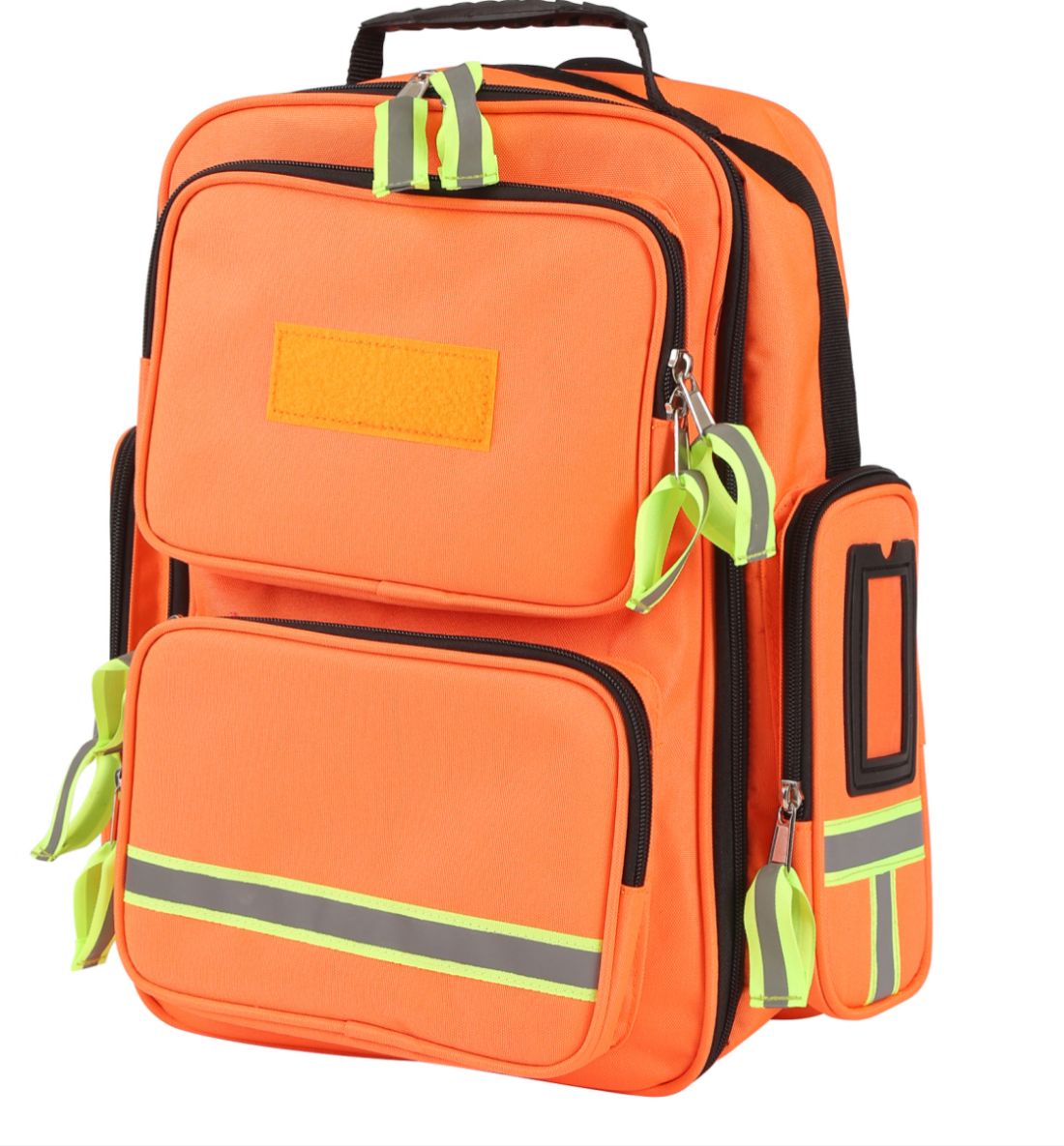
Choosing an ODM partner for custom emergency kits goes far beyond slapping a logo on a generic bag. Real customization means working through every detail—from the placement of your brand mark to the exact contents, pouch layout, and even the materials used. A manufacturer worth considering will walk you through the loadout options, suggest improvements based on real-world use, and ensure the kit reflects your organization's actual needs rather than a one-size-fits-all template. Equally important are certifications: look for partners whose compliance is verified through testing and traceable documentation, not just a printed stamp on a box. Before committing, ask for a factory tour or a video walkthrough, and pay attention to how raw materials are stored, how workers handle components, and whether quality checks happen at multiple stages.
Production capacity is another make-or-break factor. A good ODM manufacturer should be able to scale from a few hundred kits to tens of thousands without long delays—and they should be upfront about lead times, tooling requirements, and any bottlenecks. But capacity means little without clear communication. The best partners assign a dedicated project contact who responds quickly, speaks your language fluently, and flags problems before they become crises. After the first shipment, that support should continue: reorder flexibility, design adjustments, and honest feedback on what's working or failing in the field. A true ODM partnership is built on trust and responsiveness over time, not just a one-time transaction.
Contact Us
Contact Person: Andy Yu
Email: [email protected]
Tel/WhatsApp: +86 19858933676
Website: https://www.kebonfirstaid.com