

Global Shipment Data Platform Delivers Real-Time Freight Visibility for Smarter Logistics
2026-10-09
Supply chains rarely wait for the next status email. Yet most freight tracking still feels like piecing together clues from disconnected systems. Tendata flips that model. Its global shipment data platform delivers real-time freight visibility across ocean, air, and land—turning raw trade data into actionable freight intelligence. In this blog, we'll unpack how that visibility helps logistics teams cut detention costs, reroute cargo proactively, and negotiate from a position of strength.
Live Shipment Tracking Across Every Lane
When a container leaves the factory floor in Shenzhen, it doesn't simply vanish into a logistics black hole until it reaches a warehouse in Rotterdam. Live shipment tracking across every lane means exactly that: you see the truck crawling through Dongguan traffic, the vessel rounding the Cape of Good Hope, and the railcar rolling through the German countryside. No handoffs lost between carriers, no blind spots where a shipment sits on a siding for three days without a status update.
The hard part isn't tracking one lane but stitching dozens of them together. A shipment from Vietnam to Chicago might touch a barge, two ocean carriers, a cross-country train, and a local drayage provider. Most platforms can handle the ocean leg, but they fall apart at the edges. Real lane-level tracking means integrating feeder vessels, inland truckers, and rail operators into a single timeline that updates every few minutes, not every few days.
This changes how you plan. Instead of waiting for a customer to call and ask where their order is, you can spot a delay in the Panama Canal and reroute through Suez before it becomes a missing delivery. You can tell a retailer in Dallas that their shipment is twenty miles away and will arrive at the dock in forty minutes, not two days. When every lane is visible, the supply chain stops being a series of surprises and starts being something you can actually steer.
Actionable Insights from a Single Dashboard
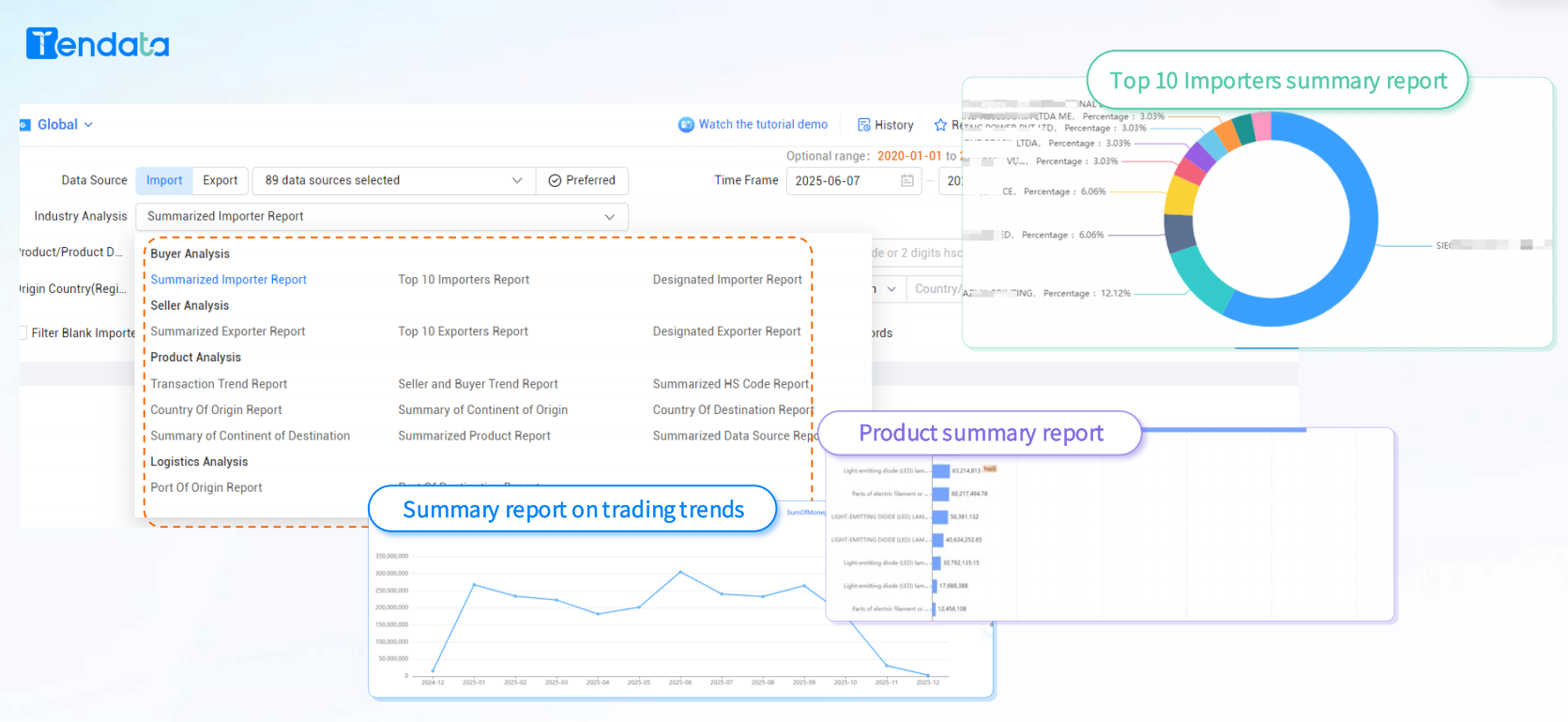
A well-structured dashboard does more than display numbers; it tells you what to do next. Instead of sifting through endless reports, you see shifts in performance the moment they happen. The real value lies in turning those shifts into clear next steps, whether that means reallocating budget, adjusting a campaign, or following up with a high-intent lead.
When every key metric lives in one view, patterns become impossible to ignore. You might notice that a particular traffic source spikes every Tuesday afternoon, or that cart abandonment rises sharply on mobile devices after a recent design update. These aren't abstract data points—they are direct prompts for action, prioritized by the dashboard itself.
The best dashboards eliminate the gap between observation and decision. Instead of asking "what changed?", you start asking "what should I do because of this change?" That shift from passive monitoring to active response is what turns a simple reporting tool into a daily driver for growth.
Proactive Alerts for Supply Chain Disruptions
Modern supply chains operate on tight timelines, yet most disruption warnings arrive hours after the damage has already begun. Instead of waiting for a missed shipment or a port closure to surface in a dashboard, proactive alerting works the way an experienced logistics manager thinks: it watches for early signals—weather fronts moving toward a key route, customs backlogs at a specific border, supplier production slowdowns in a particular region—and sends a nudge before the impact reaches your inventory. The difference is not just speed, but context. An alert that says 'typhoon approaching' is noise; an alert that says 'typhoon expected to delay your Shenzhen-to-Rotterdam air freight by 36 hours, with three alternative lanes available' is a decision tool.
The real value of proactive alerts emerges when they are tuned to your business rules, not to generic risk scores. A tier-one automotive supplier may care deeply about a two-hour delay in line-side delivery, while a furniture importer can absorb four days without consequence. By layering supplier performance history, lead-time variability, and current inventory buffers into the alert logic, you avoid the fatigue that comes from over-alerting. Quiet periods become meaningful again: if the system stays silent, you know the chain is genuinely stable. When it does fire, it should tell you what changed, why it matters for your specific orders, and what the next best action is—reroute, expedite, or simply wait with a revised ETA.
Getting proactive alerts right also means moving beyond email and into the workflows where planners actually operate. A well-timed message inside a Slack channel or an ERP exception queue beats a daily digest that nobody reads. Some teams find that a tiered approach works best: low-probability signals get logged as watch items, while high-confidence disruptions trigger an immediate call to the affected supplier. Over time, the system learns from your responses—which alerts you dismissed, which ones prompted a rush order—and sharpens its thresholds. The result is not a louder alarm system, but a quieter, more focused operation that catches problems while they are still small enough to fix.
End-to-End Visibility from Port to Door
Once a container is discharged at the terminal, the real work of coordination begins. Our visibility layer stitches together terminal handoffs, drayage moves, and final-mile delivery so you always know where a shipment sits, whether it’s waiting for chassis availability or rolling toward a distribution center. Instead of checking carrier portals or email threads, you see each status change as it happens in one shared timeline.
That line of sight extends all the way to the receiving dock. We track not just the truck, but also the handoff between the port, the drayman, and the warehouse team. If a pickup window shifts or a container gets flagged for inspection, the system updates the schedule and alerts the people who need to adjust. The result is fewer surprises, less idle time, and a cleaner handoff from ocean freight to domestic distribution.
Collaborative Tools for Logistics Teams
Logistics work rarely happens in one room. Drivers, warehouse staff, dispatchers, and customer service reps each hold a piece of the puzzle, yet their tools often don't talk to each other. A missed phone call or a spreadsheet update delayed by an hour can cascade into missed delivery windows and angry clients. The right collaborative tools close those gaps by giving everyone a shared, real-time view of shipments, inventory, and exceptions.
Look for platforms that combine live tracking with lightweight communication. Instead of email chains about a pallet stuck at a dock, team members can comment directly on a shipment record, attach photos of damaged goods, or ping the nearest driver for a rescue. Task assignment features also help: when a delivery fails, the system can automatically reroute the job to an available driver and notify the warehouse to prep a replacement order.
What makes these tools stick is how they reduce the mental load of coordination. Drivers get turn-by-turn updates without calling dispatch. Warehouse leads see incoming truck ETAs on a shared board. Managers can spot bottlenecks before they snowball. The result isn't just fewer delays—it's a team that trusts the same data, works from the same priorities, and spends less time chasing information and more time moving freight.
Scalable Data Infrastructure for Global Trade
Global trade operates on a torrent of data—customs filings, shipping manifests, logistics timestamps, regulatory updates, and payment trails. A scalable data infrastructure is the difference between smooth cross-border movement and chronic bottlenecks. Instead of relying on rigid, monolithic databases, modern systems adopt distributed architectures that can expand horizontally as trade volume spikes during peak seasons or new trade corridors emerge. This means partitioning data across regional nodes, using stream processing to handle real-time events like vessel tracking, and maintaining consistent replication so that a port authority in Rotterdam and a warehouse manager in Singapore see the same actionable picture without delay.
What makes such infrastructure truly effective is its ability to absorb heterogeneous data without forcing it into a single mold. A customs declaration in one country may be a structured XML document, while a logistics update arrives as a raw sensor feed from a container. Scalable design embraces this variety through schema-flexible storage, event-driven APIs, and polyglot persistence—pairing relational stores for financial reconciliation with document stores for unstructured trade paperwork. The goal is not just capacity, but coherence: every shipment, every compliance check, every currency conversion must be traceable back to a unified, versioned record, even when the underlying data nodes span multiple cloud regions or on-premise facilities.
Resilience under load is another non-negotiable aspect. Trade infrastructure faces unpredictable bursts—a sudden rerouting due to geopolitical tension, a surge in e-commerce packages before a holiday, or a port closure that forces immediate reallocation. A scalable system anticipates these shocks by using auto-scaling compute clusters, message queues that buffer overflow traffic, and idempotent ingestion patterns that prevent duplicate records when retries occur. By decoupling data producers from consumers, the infrastructure lets customs brokers, freight forwarders, and financial institutions all read from the same stream without blocking each other. The result is a foundation that grows with trade volume, adapts to new data types, and keeps global commerce moving even when individual components fail.
FAQ
It pulls shipment data from multiple carriers and transport modes into a single view, so logistics teams can follow freight as it moves instead of relying on delayed status updates.
Supply chain managers, freight forwarders, and shippers that coordinate across borders and carriers get the most value, since those setups usually have the most blind spots and delay risks.
Teams can catch exceptions early, reroute cargo before small issues become big ones, and give customers accurate delivery windows without having to chase carriers for updates.
No, it typically covers ocean, air, rail, and truck data, so a single shipment can be tracked across different legs even when the carrier changes mid-route.
Basic tools only show the last scan, while this platform normalizes data from different sources, flags delays before they happen, and connects shipment events to planning and inventory systems.
Most platforms of this kind are cloud-based and built to connect to existing ERPs or TMS through APIs, so implementation is usually measured in weeks rather than months.
When you can see patterns like a certain lane consistently missing connections or a port regularly adding dwell time, you can adjust lead times, choose different routings, or negotiate with carriers using actual performance data.
It often includes milestones like customs clearance, dwell time at ports, carrier performance scores, and even temperature or humidity readings for sensitive cargo.
Conclusion
Shippers and logistics providers often juggle fragmented updates from carriers, ports, and customs brokers, leaving blind spots that delay decisions and inflate costs. A global shipment data platform closes these gaps by unifying live tracking across every lane, whether cargo moves by ocean, air, rail, or truck. Teams see not just a dot on a map but the exact status of containers, pallets, and individual orders as they traverse complex trade routes. When a vessel diverts, a port congests, or a truck misses a handoff, proactive alerts push the relevant details to the right people before the disruption cascades. This end-to-end visibility from port to door means a shipment’s journey is no longer a series of disconnected events but one continuous, transparent flow.
Beyond raw tracking, the platform turns operational noise into actionable insights through a single dashboard that pulls together dwell times, transit performance, and exception trends. Logistics teams no longer export spreadsheets or wait for weekly reports; they filter by lane, mode, or customer to spot recurring bottlenecks and adjust routing on the fly. Collaborative tools let shippers, forwarders, and warehouse managers annotate shipments, assign tasks, and share documents within the same interface, eliminating email chains and version confusion. Underpinning all of this is a scalable data infrastructure built for global trade volumes, ingesting millions of events daily without sacrificing speed or reliability. The result is not just visibility for its own sake but a practical operating layer that helps teams move cargo faster, reduce detention fees, and communicate with confidence—smarter logistics driven by data that actually works.
Contact Us
Contact Person: Grace
Email: [email protected]
Tel/WhatsApp: +86 18721992033
Website: https://www.tendata.com