

China Waterproof Breathable Membrane Manufacturer Innovates Durable Weather Protection for Diverse Applications
2026-10-22
When weather turns extreme, the difference between a dry building and a costly repair often comes down to one invisible layer. That’s where Jinbo, a China-based waterproof breathable membrane manufacturer, is changing expectations. Their latest innovation delivers durable weather protection not for one niche use, but across roofing, wall, and specialty construction scenarios. Here’s a closer look at the technology and the problems it solves.
When Rain Meets Sweat: The Dual Demand Behind Modern Membranes
A waterproof jacket that traps your own sweat feels just as miserable as one that lets rain soak through. That's the fundamental tension every membrane designer wrestles with — external water pushing inward, internal vapor pushing outward, both demanding passage through the same thin layer.
The solutions split into two basic camps. Microporous structures rely on pores smaller than a raindrop but larger than a water vapor molecule, letting sweat escape while blocking liquid water. Hydrophilic membranes take a different route, using molecular chains that shuttle moisture outward through chemical diffusion. Neither approach is perfect, and the real work happens in tuning thickness, pore geometry, and surface treatments for specific use cases.
In hiking boots, a membrane might prioritize abrasion resistance over breathability; in a running shell, the balance flips. Urban architecture faces yet another set of compromises, where condensation inside a wall can cause more damage than the rain outside. The dual demand never disappears — it just gets renegotiated with every new material, every new lamination process, every new claim on a hangtag.
Microporous Engineering That Keeps Water Out Without Trapping Heat
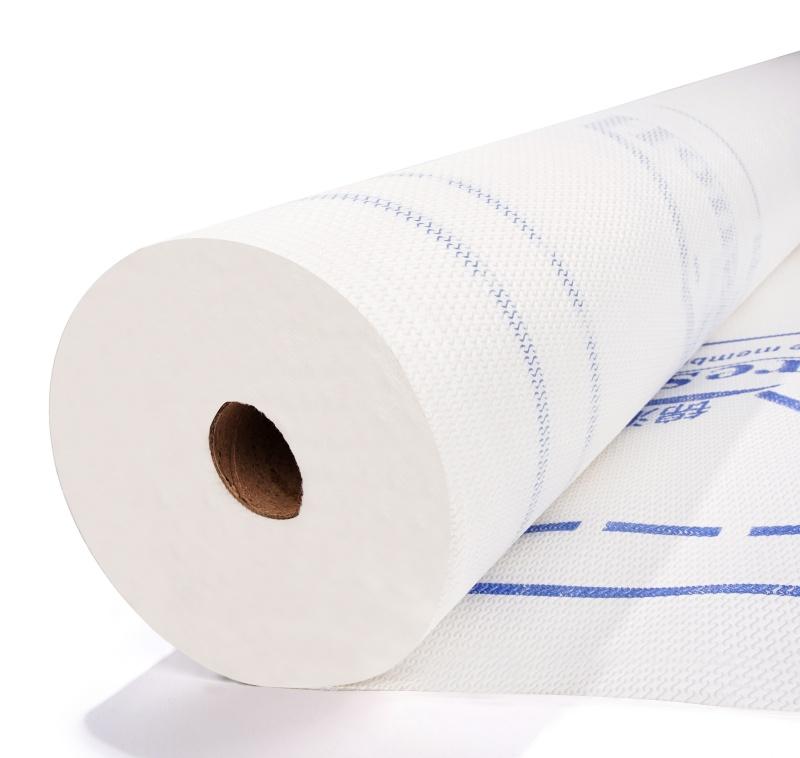
Most waterproof membranes fail because they treat breathability as an afterthought. The trick with microporous engineering is to make pores that are several orders of magnitude smaller than a raindrop but still much larger than a single water vapor molecule. Liquid water beads up and cannot squeeze through the narrow channels, while sweat evaporates and escapes as gas, taking excess heat with it. That gap—typically between 0.1 and 10 micrometers—turns a barrier into a selective filter, not just a plastic wall.
The real challenge isn't just punching holes in a film; it's keeping those pores from collapsing or swelling shut when the material gets wet. Many microporous membranes rely on a carefully stretched polymer matrix, often fluorinated or polyurethane-based, where the pore geometry stays stable under pressure. A high hydrostatic head rating tells you water won't leak through, but the more telling number is moisture vapor transmission rate. If that drops too low, the wearer ends up clammy and overheated even in dry conditions, which defeats the purpose of calling it breathable.
Recent work has moved beyond simple pore size control. Some designs layer different pore densities to create a one-way valve effect, letting vapor out quickly while resisting external water from wind-driven rain. Others use electrospun nanofibers with tortuous paths that break up airflow, reducing convective heat loss without blocking diffusion. The result feels less like wearing a plastic bag and more like a second skin that manages moisture on its own terms.
From Rooftops to Rescue Gear: Where This Chinese Innovation Fits
On rooftops, the appeal is immediate: homeowners who have dismissed traditional panels because of weight, ugly racking, or tricky roof angles find a different option. This thin, peel-and-stick solar film follows the contour of almost any roof, its matte surface blending into shingles and metal instead of sitting above them. It still generates usable power on grey, drizzly afternoons, and installation doesn't require drilling dozens of holes or reinforcing old rafters. A row of ordinary suburban roofs becomes a scattered, quiet power plant, each house feeding a battery in the garage or a water heater in the basement.
The same material shows up in rescue gear, though it looks entirely at home there. Folded into a pouch no bigger than a folded map, it rides in the side pocket of a first responder's pack. When a mountain trail rescue runs past sundown or a flood cuts off the grid, a paramedic can unfold the panel across a rock or hood of a truck and charge radios, headlamps, or a portable oxygen concentrator. It shrugs off dirt, rain, and the partial shadow of a passing branch, which matters more than peak output when someone is waiting for a medevac. No generator, no fuel can, no roar.
Between those two extremes, the innovation slips into truck canopies, pop-up campers, remote weather stations, and temporary shelters after storms. That range is the point. A material tough enough for a rooftop and light enough for a rescue pack doesn't need a new version for every job. It moves from permanent infrastructure to throw-and-go emergency kit without changing its core design, which is why the same roll of film can end up bolted above a kitchen and stuffed inside a trauma bag a week later.
How Continuous Film Extrusion Changed Long-Term Outdoor Performance
Before continuous extrusion became standard, outdoor films often failed unpredictably because thickness variations and inconsistent molecular orientation created weak spots that accelerated UV degradation and stress cracking. Switching to continuous lines eliminated those batch-to-batch irregularities, giving converters the ability to hold gauge tolerances tight enough that a greenhouse cover or geomembrane could survive years of wind, hail, and sunlight without premature splitting.
The real leap came with multilayer coextrusion running continuously. Instead of blending all additives into a single layer, manufacturers could put high-load UV stabilizers and antioxidants only in the skin layers, keep the core tough and opaque, and even add a barrier to slow hydrolysis. This precise placement meant the expensive light stabilizers weren't wasted in the middle of the film where they had no effect, and the surface stayed protected far longer than any monolayer batch film could manage.
Continuous process monitoring also changed expectations. Inline thickness gauges, automatic die adjustment, and real-time melt pressure control meant a roll made in January performed the same as one made in July. For long-term outdoor applications like photovoltaic backsheets or agricultural mulch, that repeatability matters more than raw material specs, because you need every square meter to fail at roughly the same time, not randomly in the field.
The Hidden Cost of Cheap Barriers—And What Durable Really Means
A barrier that costs half as much up front often ends up costing twice as much before the first year is out. Thin galvanizing flakes after a single winter. Welds crack under routine impact. Bolts loosen, panels sag, and suddenly the savings evaporate into repair crews, shutdowns, and replacement orders. Most buyers never track those follow-up expenses, which is exactly why cheap keeps winning the purchase order.
Durable doesn't mean heavier or overbuilt. It means the material and design were chosen to survive the specific abuse they'll face—salt spray, forklift strikes, UV exposure, or constant vibration. A well-made barrier uses the right steel grade, proper coating thickness, and connections that hold their torque. The difference shows up years later, not on day one.
The real price of a barrier is what you pay after it's installed. If you're not factoring in replacement labor, downtime, and the risk of a failed guardrail, you're not comparing products—you're comparing invoices.
Testing Beyond the Lab: Real-World Weather Proofing for Harsh Climates
Laboratory environmental chambers do a decent job isolating single stressors, but they rarely capture the messy overlap found outside. A device rated for -20°C in a controlled chamber can still fail on a wind-scoured ridge where ice forms, thaws, and refreezes around connectors. That's why we moved beyond the lab, bolting prototypes to rooftops in Reykjavik, shipping containers crossing the Persian Gulf, and telecom towers in the Atacama. Real weather arrives as a package: salt spray followed by dust, then a sudden downpour, then relentless UV.
The field protocol runs twelve to eighteen months, with monthly teardowns and detailed imaging of seals, PCBs, and coatings. We log micro-cracks in polymer housings, track impedance shifts on exposed circuit traces, and measure how much torque it takes to open a corroded latch. One unit in coastal Newfoundland showed galvanic corrosion around stainless fasteners within four months, something no salt-fog cabinet had predicted because it never also cycled from -5°C to 25°C three times a day.
Those failures feed directly back into design choices. We swapped to titanium fasteners, added a breathable membrane with a labyrinth drain path, and changed the gasket material to a fluorosilicone that stays flexible at -50°C. The result isn't just a longer spec sheet; it's hardware that keeps reporting from a weather station in Svalbard through a polar night, and that's the kind of proof you only get by letting the world do the testing.
FAQ
The company develops waterproof breathable membranes that keep liquid water out while allowing moisture vapor to escape. Their current work centers on improving long-term weather resistance so the material stays functional across a wide range of environments.
It relies on a microporous structure with openings small enough to block water droplets but large enough for vapor molecules to pass through. Adjusting pore size and distribution during production lets the manufacturer tune the balance for different use cases.
The product is designed to handle prolonged rain, heavy snow, high humidity, and strong winds without delaminating or losing its protective properties. UV exposure and temperature swings are also part of the durability testing.
They are used in building envelopes, roofing underlayments, outdoor apparel, medical protective gear, and industrial packaging. The same core technology gets adapted depending on the required breathability and mechanical strength.
Rather than offering a one-size-fits-all film, they work closely with clients to modify thickness, pore structure, and bonding layers. The production line also includes continuous quality checks that catch inconsistencies before full batches are shipped.
Yes, the technical team can adjust parameters such as air permeability, hydrostatic head, and tensile strength. Custom widths, colors, and laminate combinations are possible as long as they align with the intended end use.
Accelerated aging tests, cyclic temperature exposure, and long-term outdoor trials are used to confirm that performance does not drop sharply over time. The manufacturer also runs adhesion and puncture resistance tests to simulate real-world handling.
Conclusion
The push for weather protection that can handle both rain from outside and sweat from inside has driven a quiet rethinking of membrane design. Instead of relying on thick, non-porous films that trap heat, manufacturers in China have focused on microporous structures—layers fine enough to block liquid water yet open enough to let vapor escape. That balance isn't just a lab metric; it shows up in how the material behaves on a rooftop during a summer downpour or inside a rescue jacket after an hour of hard climbing. The same membrane technology now spans building wraps, outdoor gear, medical protective fabrics, and even footwear, each application demanding slightly different pore sizes and stretch characteristics. What ties them together is a shift away from one-size-fits-all waterproofing toward tuned breathability that matches real conditions rather than idealized test charts.
Continuous film extrusion has quietly reshaped long-term outdoor performance. Older coated fabrics often crack or delaminate after a few seasons because the waterproof layer sits on the surface like paint; extruded films integrate into the substrate during forming, giving the membrane a tougher bond and more uniform thickness. That matters when cheap imported barriers look fine at first but fail after exposure to UV, salt spray, or freeze-thaw cycles. Durability here is not a marketing word—it means fewer patches on a roof under monsoon rains, fewer delaminated seams on a firefighter's gear, and less replacement waste in remote construction sites. Testing outside climate chambers in actual hail, desert dust, and coastal humidity has become the practical benchmark. The result is a Chinese innovation that does not shout about being advanced; it simply holds up longer where weather is unforgiving, and does so without turning a rain jacket into a sweat box.
Contact Us
Contact Person: Miranda
Email: [email protected]
Tel/WhatsApp: +8615231299719
Website: https://www.ihousewrap.com/