

China HVAC Retrofit Opportunities for Energy Efficient Buildings
2026-09-16
China's push for carbon neutrality by 2060 is turning every aging chiller, pump, and air handler into a retrofit waiting to happen. The scale is staggering: over 60% of existing commercial floor space runs on HVAC equipment that predates current efficiency standards, leaving billions of square meters of savings on the table. For contractors and facility owners, this isn't just maintenance—it's a strategic opening to cut energy bills by 30–50% while meeting tightening building codes. Tongbaote has been tracking this shift across provinces, and the data points to one conclusion: those who move first on energy-efficient retrofits will own the next decade of China's building services market.
Why China's Older Buildings Are Ripe for HVAC Efficiency Upgrades
Much of China's pre-2000 building stock was put up quickly to meet housing and commercial demand, with little attention paid to how much energy the heating and cooling systems would consume decades later. In many of these buildings, the original boilers are still in place, pipe insulation has degraded, and the only temperature control is a manual valve that tenants rarely touch. This lack of basic automation means heat is often delivered around the clock, even when rooms are empty or the outside temperature is mild.
A common sight in older office blocks is a mix of outdated split air conditioners bolted onto facades, each running independently with no central coordination. The chillers in the basement may date back to the building's opening, and maintenance teams keep them alive with improvised fixes rather than planned replacements. As a result, these buildings consume far more electricity and gas per square meter than newer certified green buildings, yet still struggle to maintain a comfortable indoor environment during extreme weather.
What makes this segment particularly ready for upgrades is the low baseline efficiency. Because so little has been optimized, even conventional measures like adding variable speed drives, sealing ductwork, or replacing worn-out cooling towers can deliver sharp reductions in energy use. For property owners, the business case is compelling: lower operating costs, longer equipment life, and a clear path to meeting tightening energy codes without waiting for a full building redevelopment.
Heat Pump Retrofits Take Off in China's Cold Climate Cities
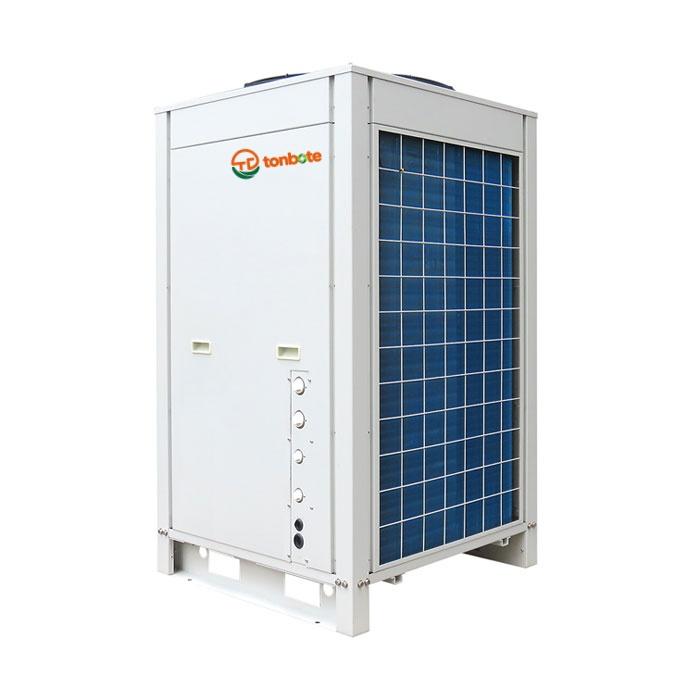
In Harbin, Shenyang, and Changchun, the switch from coal-fired boilers to heat pumps is no longer just a pilot project. Older apartment blocks built in the 1990s and early 2000s are getting retrofitted with low-temperature air-source heat pumps that can keep indoor temperatures steady even when outdoor air drops below minus 20 degrees Celsius. The change is visible in back alleys where coal sheds once stood, now replaced by rows of compact outdoor units. Residents who spent years hauling coal and cleaning ash are finding the new systems quieter and far less labor-intensive.
A key reason for the surge is that heat pump performance in extreme cold has improved enough to satisfy local heating demands. Manufacturers now use enhanced vapor injection compressors and larger heat exchangers, allowing units to maintain a coefficient of performance around 2 at minus 25 degrees Celsius. At the same time, municipal clean-heating subsidies and time-of-use electricity tariffs have narrowed the running cost gap with coal, making retrofits more attractive to housing management offices and small commercial landlords.
Installation practices are also adapting to tight urban spaces and older building envelopes. Contractors in northeast China have developed split-system layouts that place the compressor on balconies or rooftop platforms, while refrigerant lines run through existing pipe chases. Some projects still face long commissioning periods and a shortage of technicians familiar with low-temperature refrigerant charge, but the overall trajectory is clear. Heat pump retrofits are moving from scattered demonstrations to neighborhood-scale replacements, reshaping how cold-climate cities think about winter heating.
The Overlooked Savings Potential of Smart HVAC Controls
Most conversations about HVAC energy use start and end with equipment nameplates—SEER ratings, AFUE percentages, compressor staging. What gets far less attention is how the system behaves when nobody is watching. Smart controls shift the focus from peak efficiency under ideal lab conditions to actual, hour-by-hour building loads. A rooftop unit that cycles based on a fixed schedule might still run full airflow through an empty conference wing at 2 p.m., while a demand-based strategy trims fan speed and opens dampers only where CO₂ levels justify it.
That gap shows up clearly in utility data. Buildings with identical chillers and air handlers can post wildly different consumption numbers because one has static setpoints and the other uses setback, occupancy sensing, and dynamic resets. In several recent retrofits, simply lowering duct static pressure by half an inch and letting zone-level controls trim airflow delivered more savings than a chiller replacement would have—at a tenth of the cost. These measures are rarely glamorous, but they compound because they run every operating hour.
Part of the reason smart controls stay overlooked is that they do not produce a clean line item in a capital budget. They are a mix of small hardware, software tweaks, and commissioning time. Yet the operational savings often outpace high-profile upgrades. For buildings with intermittent occupancy or wide swings in outdoor temperature, tightening the control sequence is frequently the highest-return move that no one has modeled.
How Local Incentives Are Changing the Retrofit Cost Equation
A growing number of municipalities are no longer waiting for federal or state programs to trickle down. Instead, they're building their own incentive stacks—think property tax abatements tied to energy performance, low-interest loans repaid through utility bills, and direct rebates for electrification. These local layers often arrive faster than broader initiatives and can be tailored to the housing stock in a specific zip code, which shifts the math on a typical retrofit in ways that generic calculators miss.
The effect shows up most clearly in mid-sized cities where a $18,000 heat pump retrofit might have penciled out at a 14-year payback. Add a municipal rebate of $3,500, a waived permit fee, and a property tax freeze for five years, and the same project can reach break-even in under eight years. Contractors in these areas report that the local incentives are doing more to move homeowners than ever before, especially when combined with existing utility rebates—the stack reduces the upfront cash outlay enough that monthly energy savings start covering the financing cost almost immediately.
What makes these programs stick is their flexibility. Rather than a one-size-fits-all rebate, some local governments now offer tiered incentives based on the depth of the retrofit, while others negotiate directly with lenders to buy down interest rates for qualifying households. That granular approach turns a retrofit from a long-term environmental gesture into a near-term cash-flow decision, and it's quietly rewriting the cost equation block by block.
What Real Payback Periods Look Like for Commercial Retrofits
Real payback periods for commercial retrofits tend to be messier than the spreadsheets suggest. Lighting jobs, especially LED conversions in warehouses or parking garages, often come in between 2 and 4 years after rebates. HVAC equipment replacements are less predictable: a rooftop unit swap might pay back in 5 years, but a full chiller plant overhaul can easily reach 8 or 9 years before energy savings cover the upfront cost.
What most owners overlook is the effect of operational savings that never show up in a simple energy model. For example, a $180,000 boiler retrofit with a projected 6-year payback on gas savings alone can drop to 3.5 years once you factor in avoided emergency repairs, lower maintenance labor, and a utility incentive that covers 15% of the installation. On the other hand, projects that ignore how the building is actually occupied—like assuming a 12-hour HVAC schedule when tenants run 24/7—tend to underperform and stretch payback by 2 or 3 extra years.
Owners planning to sell within five years rarely approve retrofits showing a payback over seven, regardless of the technology. The final number usually sits between the vendor's best case and the engineer's worst case, and it drifts more with local utility rate changes than with equipment nameplate efficiency.
Field Lessons from Early Adopters of Energy-Efficient HVAC
Early adopters quickly discovered that nameplate efficiency ratings don't survive contact with real buildings. A heat pump that performs beautifully on a test bench can struggle in a 1960s high-rise where duct leakage, mismatched coils, and bypass dampers quietly erase expected savings. The most telling field data often came from simple runtime logs and monthly utility bills rather than design-stage energy models. Teams that paired the new HVAC equipment with a hard look at duct sealing, filter pressure drop, and existing zoning controls consistently outperformed those who did a like-for-like swap.
Occupant complaints turned out to be a better diagnostic tool than many engineers expected. Instead of dismissing rooms that ran hot or cold as comfort preference, early adopters used those complaints to find undersized diffusers, missing balancing dampers, and dead-band settings that forced electric reheat to fight the cooling coil. One retrofit team cut peak demand by nearly a fifth simply by reprogramming the schedule and widening the dead band after reviewing a month of zone temperature logs. The equipment barely changed—the control logic did.
Maintenance staff became the make-or-break variable. Buildings where facilities teams received hands-on training for the new sequences and had access to trend data kept performance close to expectations. Others drifted back to old habits, overriding setpoints and disabling demand ventilation within weeks. Early adopters learned to design for that reality: simpler interfaces, fewer custom sequences, and alarm thresholds that flagged drift before it became a permanent energy penalty.
FAQ
China's huge stock of aging buildings, high energy consumption, strong government push for carbon peaking and neutrality, and urban renewal programs create a concentrated demand for retrofits. Unlike many Western markets, numerous systems are relatively young but inefficient because they were installed under older standards with poor maintenance. This leads to unique opportunities for replacement and optimization.
Public buildings such as offices, shopping malls, hotels, and hospitals have high energy intensity, long operating hours, and strict comfort requirements, so they tend to deliver the most noticeable savings from retrofits. Additionally, residential buildings with district heating in northern China and large industrial plants hold potential, but commercial and public sectors usually have clearer payback periods.
High-efficiency chillers, variable frequency drives, intelligent building automation systems, magnetic bearing compressors, heat recovery ventilation, and IoT-based energy management platforms are in high demand. There is also growing interest in replacing older refrigerants like R22 and swapping conventional boilers for air-source heat pumps.
China has green building evaluation standards, energy conservation regulations for public institutions, and the 14th Five-Year Plan for building energy efficiency and green building development. Many cities offer subsidies or low-interest loans, and key energy-consuming units face mandatory energy audits and retrofit targets. The carbon trading market also pushes building owners to upgrade equipment proactively.
Upfront capital remains a major hurdle, especially for small and medium-sized property owners. The lack of a unified standard for verifying energy savings sometimes makes owners distrust energy service companies. Retrofits can also disrupt normal building operations, and design and construction coordination is complex. In some older buildings, limited space makes installing new equipment difficult.
The most common method is simple payback period, calculated by dividing retrofit costs by annual savings in electricity and maintenance. In China, many projects achieve payback within three to five years. A more rigorous approach uses net present value or internal rate of return, factoring in extended equipment life, fewer breakdowns, and improved tenant satisfaction as indirect benefits.
Yes. Northern severe cold and cold regions focus on heating system upgrades like heat metering and heat source replacement. Hot summer cold winter zones such as the Yangtze River Delta need both cooling and heating, so heat pump adoption is growing fast. Southern China concentrates more on efficient cooling and dehumidification. Tier-one cities have stricter policies and more commercial projects, while lower-tier cities rely more on simple replacement of outdated equipment.
Energy performance contracting lets energy service companies cover the upfront investment and get paid from the energy cost savings. This solves the capital concern for building owners and is common in public buildings and large commercial projects. However, it requires a clear baseline of energy consumption and third-party verification to avoid disputes. Current policies encourage this model, especially for government office buildings and schools.
Conclusion
China's vast stock of aging commercial and residential buildings is quietly becoming one of the most compelling energy-efficiency plays in the global HVAC sector. Many structures erected during the country's rapid urban expansion were built with low-cost, low-efficiency heating and cooling systems that are now reaching the end of their service life. In cold-climate cities like Beijing, Shenyang, and Harbin, heat pump retrofits are moving beyond pilot projects as building owners seek to cut reliance on coal-fired district heating and volatile gas prices. Meanwhile, smart HVAC controls remain an underused lever: adding demand-based ventilation, variable speed drives, and predictive maintenance can cut energy use by 15–30 percent without replacing major equipment.
The economics are improving faster than many outsiders assume. Local incentives—from municipal subsidies to green finance instruments—are shaving upfront costs, while rising electricity tariffs and stricter building codes push payback periods for commercial retrofits into the three-to-five-year range in many regions. Early adopters report that the biggest savings often come not from the headline equipment swap but from commissioning, sensor calibration, and tenant engagement. That field experience is now feeding into a second wave of projects where owners bundle heat pumps, controls, and envelope improvements to capture deeper savings. For manufacturers and service providers willing to navigate China's regional policy patchwork, the retrofit pipeline is substantial and growing.
Contact Us
Contact Person: Wanshu Chen
Email: [email protected]
Tel/WhatsApp: +86-13662871206
Website: https://www.mbcee.com