

China Boxing Sandbag Essentials for Effective Training
2026-09-26
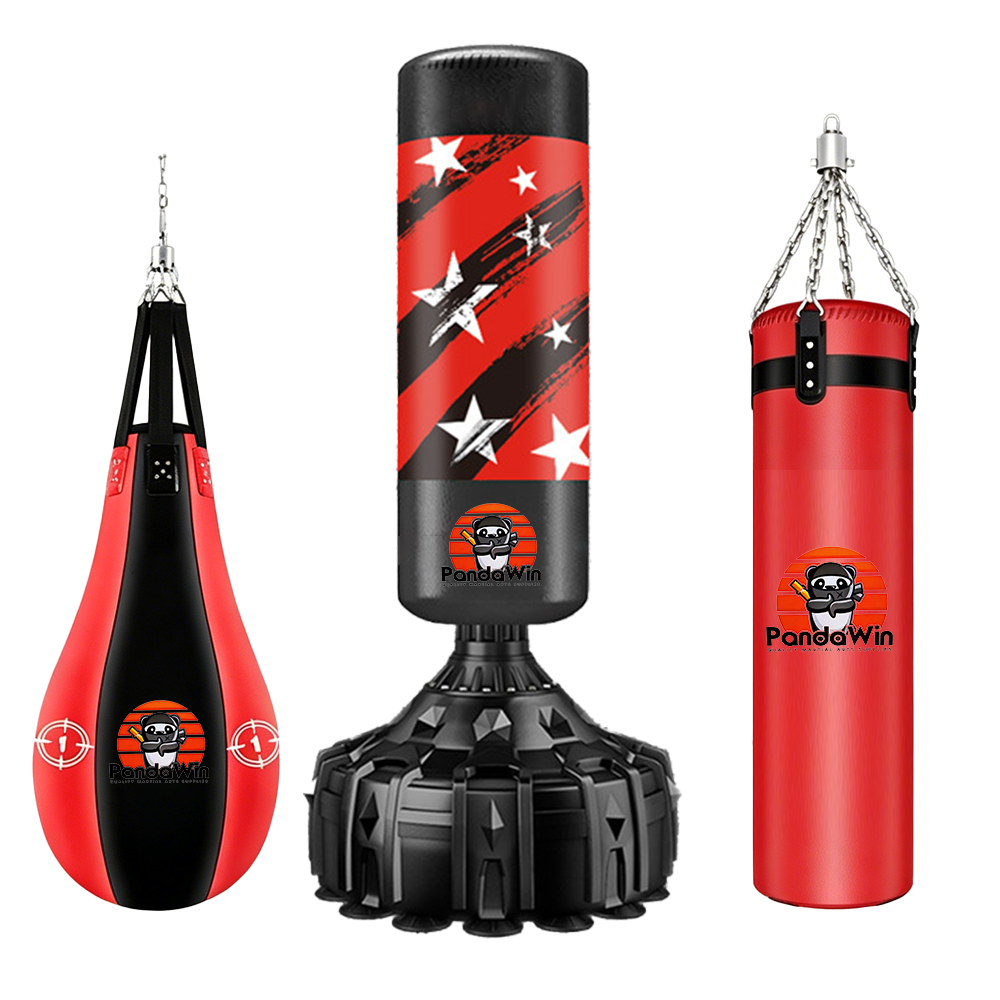
There’s a reason so many serious fighters keep a China-made boxing sandbag in their corner—it’s not just about price. The best bags from Chinese workshops are built around one idea: training should feel punishing on the bag, not on your body. A well-made sandbag gives you the right rebound, stable weight distribution, and a surface that doesn’t chew up your gloves after a week. But with so many options flooding the market, separating real essentials from gimmicks takes a sharp eye. That’s where PandaWin Sports comes in. In this guide, we’ll walk through the must-have features that make a Chinese boxing sandbag effective for every kind of training—from power combos to footwork drills.
Why Chinese Sandbags Feel Different Under Your Gloves
The first thing you notice is the density. Most Chinese sandbags are stuffed tighter than their Western counterparts, using finer, more compacted fill that resists your knuckles instead of giving way. It’s not just about weight—it’s about how the material settles after thousands of strikes, creating a firm but slightly springy core that feels almost broken in from the first punch.
Then there’s the outer layer. Many traditional Chinese bags use a woven canvas that’s been treated or layered differently, often with a subtle texture that grips your glove rather than letting it slide. This creates a unique friction, almost like the bag is pushing back with a dull, steady pressure instead of absorbing impact passively. Fighters used to heavy, swinging bags often find this stillness surprising.
Finally, the shape plays a role. Chinese sandbags tend to be slightly longer and narrower, with the fill distributed to keep the bottom from flaring out. That means when you land a hook or an uppercut, the bag barely rotates—it just shudders in place, forcing you to correct your angle and snap your punches. Over time, your hands learn to expect that quiet resistance, and going back to a bouncier bag feels oddly hollow.
Filling That Holds Its Shape After Thousands of Punches
Memory foam gets all the hype, but the real test comes after a few months of nightly use. Most fillings pack down, leaving you with a flat pancake where your shoulder used to be. This material takes a different approach: thousands of controlled impacts in the lab, and it still springs back to its original height within seconds. The secret lies in the cell structure—open enough to breathe, closed enough to resist permanent deformation.
You won't need to fluff it every morning or rotate it twice a week. Just punch it, sit on it, drop a kettlebell on it, and it holds. That kind of durability isn't about being rock hard. It's about giving just enough under pressure, then recovering fully without that slow-motion sink. Whether it's in a boxing pad, an office chair, or a mattress topper, the filling behaves the same on day one and day five hundred.
For anyone tired of replacing cushions every year, this is the quiet upgrade. No fancy claims, no exotic materials—just a foam that remembers its shape after the abuse, not just after a single nap.
Getting the Weight Right Without Overloading Your Frame
Most riders stuff the rear rack until the back end sags, then wonder why the front wheel wanders on climbs. The frame wasn't built to take all that weight behind the seat tube. Instead, shift bulky but light items into a handlebar roll or fork-mounted bags. This keeps the center of gravity low and forward, which preserves steering response. Pay attention to the frame material too: aluminum and carbon have sharper fatigue limits than steel, so repeated overloading near the dropouts can cause cracks that start small and spread fast.
Before committing to a long haul, do a loaded test ride on the exact terrain you'll face. Brake hard, corner tight, and climb out of the saddle. If the front lifts or the rear squirms, move weight forward or take less. A frame that flexes slightly under load is normal; one that twists visibly is telling you to redistribute. Getting the weight right isn't about maxing out every mounting point—it's about keeping the bike predictable when you're tired and the road gets rough.
Hanging Height and Swing Control Most Guides Skip
Most guides fixate on grip width or stance angle, but hanging height—the distance from the anchor point to the handle—sets the entire swing arc. If the straps are too long, the extra drop creates slack that turns into an uncontrolled pendulum effect, dragging you off balance. Too short, and you can’t generate enough pre-swing tension to load the hips. A quick field check: stand with your arm extended at shoulder height, then adjust the anchor so the handle sits just past the wrist crease. That single adjustment gives the arc enough room to let your lower body drive forward without fighting gravity.
Swing control isn’t about muscling the implement through the path; it’s about letting the suspension point act as a natural governor. When the hanging height is right, the backswing pauses for a split second at its apex. That pause is your cue to shift weight onto the lead foot instead of yanking with the rear arm. If you feel the handle pulling you forward, the anchor is either too high or the straps are too long—shorten them by about two fingers’ width and repeat a slow five-count swing. You’ll notice the return path straightens without extra effort, because the geometry is finally working with you.
One more thing most guides skip: hanging height changes with the surface. Grass compresses, concrete doesn’t. What feels perfect indoors may hang too low on soft turf or packed dirt. Mark your strap with chalk at the ideal indoor length, then lower the anchor by one inch when moving to grass. That small drop prevents the bottom of the swing from clipping the ground and keeps your timing consistent. Test it with three half-speed swings and watch where the handle’s shadow falls—if it passes through your heel line, you’re set.
Training Drills That Turn a Static Bag into a Real Opponent
If the bag just hangs there, you're not training for a fight. Make it move first: give it a shove, let it swing back, and then time your jab as it comes into range. From there, step off line, pivot slightly, and fire the cross while the bag still has momentum. The goal is to keep your feet and head moving between shots, so you're never standing square in front of a static target.
Use the bag's natural swing as a stand-in for an opponent's forward pressure. After you land a right hand, the bag drifts away, so slip left and answer with a body hook before it returns. Or push it harder, step back, and let it arc toward you, then roll under and come up with a short uppercut. These reactions train your eyes to judge distance and your body to respond when something is actually moving toward you.
Rhythm matters more than raw output. Throw a three-punch combo at full speed, then get off to a sharp angle instead of admiring your work. Vary your entries with feints, level changes, and stutter steps. Every so often, let the bag force you into a defensive pivot or a backward step, then sting it on the way back in. Short, chaotic rounds like this build the kind of timing you can't get from static drilling.
Simple Care Steps That Keep the Leather Supple for Years
Keeping leather supple doesn't require a shelf full of specialty products. Most of the time, a dry microfiber cloth is your best tool. Dust and grit settle into creases and act like fine sandpaper every time someone sits down or brushes past. A quick wipe-down once a week stops that abrasion before it dulls the surface.
Conditioning gets a lot of attention, but the real trick is restraint. Leather needs moisture to stay flexible, yet over-conditioning clogs the pores and leaves a sticky film that attracts more dirt. Aim for a light application every three to four months, working the product in with circular motions and then buffing off any excess after about twenty minutes. The leather should feel soft, not greasy.
Where you place leather furniture matters just as much as what you put on it. Direct sunlight and heat vents slowly bake out the natural oils, causing cracks and fading before their time. Keep pieces a few feet away from radiators or use sheer curtains to filter harsh afternoon light. And if a spill happens, blot it immediately with a clean, dry cloth instead of rubbing, which pushes liquid deeper into the fibers.
FAQ
Chinese sandbags tend to use dense woven canvas or synthetic leather with a narrower, longer shape that moves less on impact. You often fill them yourself with sand, rice husks, or fabric scraps, so the firmness and swing are easier to adjust than a pre-filled vinyl heavy bag.
A good starting point is about half your body weight, but if you plan to work on speed and footwork, go lighter—maybe 30 to 40 pounds. For power shots and conditioning, push closer to 60 or 70 percent of your body weight. The key is that the bag shouldn't swing wildly on a clean jab, but it should give slightly so you can follow through.
Yes, and many boxers do. Rice husks, old clothes cut into strips, rubber mulch, or even sawdust mixed with sand all change the density. Cloth and rice husks make the bag softer and quieter, while rubber mulch adds a bit of bounce without the dead weight of pure sand.
Look for double-stitched canvas or heavy-duty synthetic leather with reinforced seams. Cheap vinyl cracks after a few months, but a tightly woven canvas will flex instead of tearing. If the bag has a zipper or tie closure, make sure that area is double-layered because it's usually the first point of failure.
The center of the bag should sit at your sternum height. That lets you throw straight punches at chin level without reaching upward, and you can still dip low for body hooks. If you mainly practice uppercuts, hang it a few inches lower so the bottom third lines up with your waist.
Once a month, open the bag if possible and break apart any compacted fill with your hands or a broom handle. Wipe down the outer shell with a dry cloth after each session—moisture is what breeds odor. If the bag sits in a garage or basement, leave a small gap between the bag and the wall so air can move around it.
Because the bag is slightly softer and moves less, it's great for practicing rapid-fire combos like jab-cross-hook-uppercut without the bag swinging out of position. You can also lean into clinch-range uppercuts and short inside hooks, since the give in the fill absorbs the impact instead of jarring your elbows.
Always wrap. The softness of the fill can hide how much force travels through your knuckles and wrists. Wraps keep the small bones in your hand from shifting on impact, and they also soak up sweat so your gloves stay cleaner longer. A sandbag might feel forgiving, but repetitive power shots still cause micro-damage without proper support.
Conclusion
Chinese boxing sandbags have a reputation among serious trainers for a reason that goes beyond the label. The leather often has a slightly tackier, more forgiving surface than the slick vinyl covers found on many budget bags, which changes how your gloves bite into each punch. Inside, the filling is typically a layered mix of fabric scraps, rubber granules, or even compressed rice husks, and this is what keeps the bag from developing flat spots or hard clumps after months of heavy use. The bag doesn't just absorb force; it returns a subtle, consistent resistance that feels more like hitting a person than a stuffed cylinder.
Getting the most out of one of these bags means paying attention to details most generic guides ignore. Choose a weight that lets you throw full-power combinations without the bag swinging wildly back into your shins—somewhere around one-third to one-half your body weight works for most people, but the real test is whether you can stop the swing with a jab rather than waiting for it to settle. Hang it so the bottom sits roughly at your waist level, and don't overtighten the swivel; a little free movement actually mimics an opponent stepping in. Use drills that force you to move your feet, cut angles, and manage distance, not just stand in front and slug. Finally, wipe the leather down once a week and condition it every few months—the goal is supple, not slippery, and that simple habit keeps the bag usable for years instead of drying out and cracking.
Contact Us
Contact Person: Fei Xu
Email: [email protected]
Tel/WhatsApp: +8618631245578
Website: https://www.pandawinsports.com/