

Best Pipe Shot Blasting Machine Factory for Superior Surface Preparation
2026-10-28
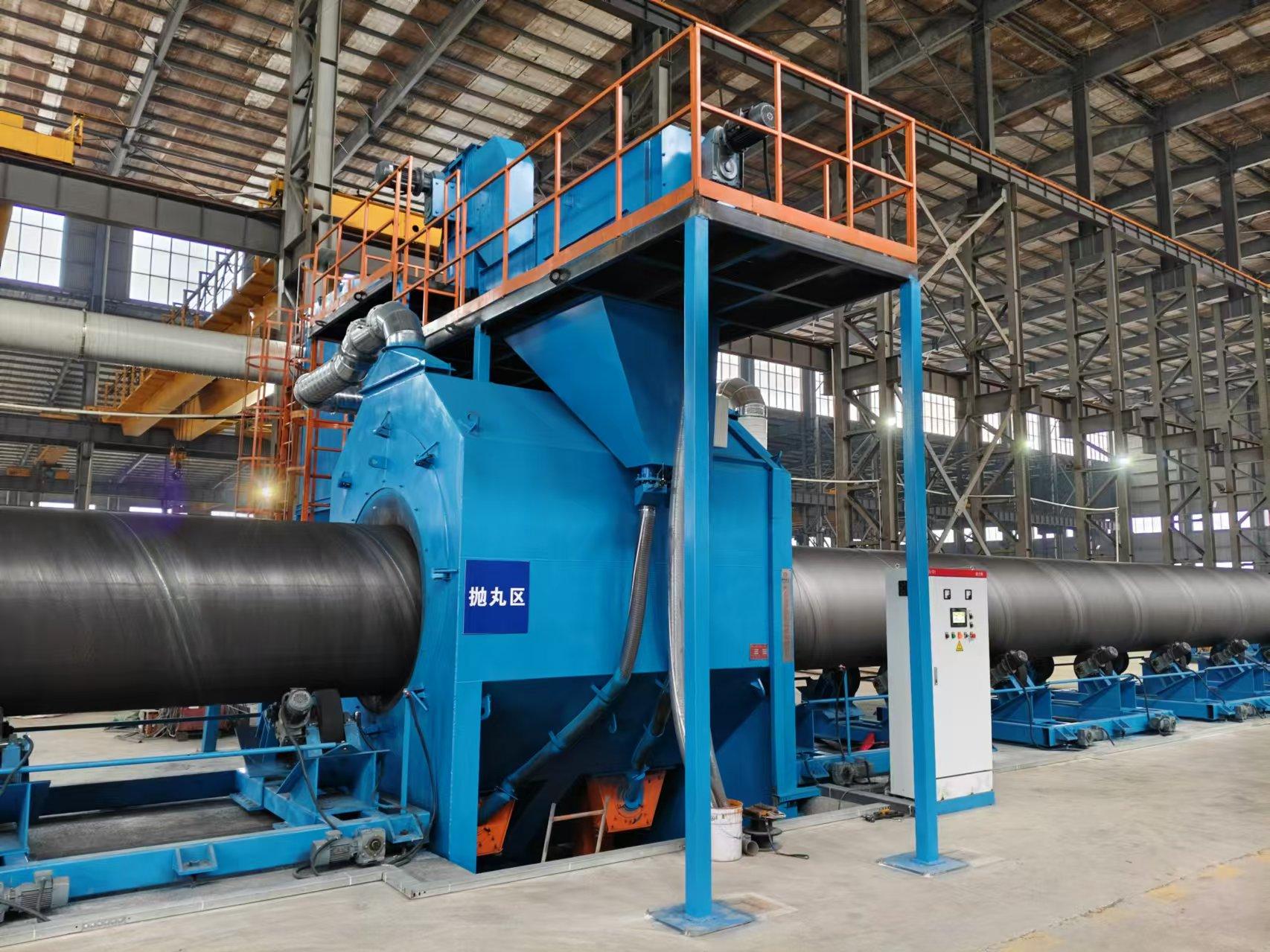
Finding a reliable pipe shot blasting machine factory is tougher than it sounds—most suppliers promise high performance but deliver inconsistent surface prep. At PuHua, we take a different approach: every machine is built to handle real production demands, not just demo specs. In this post, we’ll look at what truly matters for superior surface preparation and why our factory has become a go-to choice for contractors worldwide.
When Pipe Surfaces Demand More Than a Standard Blast
Standard blast profiles leave most pipe surfaces with a consistent anchor pattern, but real-world pipelines rarely stay that predictable. High-pressure lines, coated spools, or pipes exposed to aggressive chemicals often develop uneven mill scale, stubborn epoxy remnants, or localized corrosion pockets that a generic blast simply skims over. When those irregularities sit just beneath the surface, adhesion failures show up later as blistering or premature coating delamination.
The moment you notice patchy roughness after blasting, it usually means the abrasive mix is too uniform for the job. A blend of angular steel grit with a sharper aluminum oxide fraction can cut through hard deposits without over-profiling softer zones. Adjusting the nozzle standoff distance and dwell time also stops operators from polishing high spots while leaving low areas untouched.
For pipe that has been in service, especially with heat-affected zones near welds or threaded ends, the surface demands a more tailored approach. Switching to a centrifugal wheel with variable speed control or using a wet/dry hybrid blast keeps the temperature down and prevents smearing contaminants into the steel. The goal isn't just a deeper profile; it's a consistent one that lets the next coating system actually grip the metal instead of fighting it.
Inside the Engineering That Keeps Abrasive Flow Predictable
Predictability in abrasive flow doesn't happen by luck. It comes from a deliberate dance between media viscosity, extrusion pressure, and tooling geometry. When engineers tune these variables, the abrasive-laden polymer behaves less like a chaotic slurry and more like a programmable fluid, eroding material at a rate you can map and repeat. The trick is understanding that the media doesn't just flow—it remembers the path of least resistance, and the engineering goal is to convince that path to be the one you actually want.
Another layer of control hides in the media's own rheology. Abrasive flow media is a non-Newtonian fluid, meaning its resistance changes under shear. By manipulating the base polymer's molecular weight and the abrasive grain concentration, engineers can dial in a specific flow curve. A steeper curve gives you aggressive cutting in tight passages but risks stalling in sudden expansions. A flatter curve trades speed for uniformity. The predictable result isn't a single setting—it's a carefully chosen compromise between material removal rate and surface finish consistency, tested against real part geometry rather than idealized channels.
Finally, the tooling itself acts as a silent co-author of predictability. Restrictor plates, mandrels, and flow guides are not just accessories; they reshape the velocity field so that abrasive particles spend equal time on every critical surface. A well-designed fixture turns a turbulent, uneven flow into a laminar-like procession of cutting edges. Small changes in bore diameter or exit angle can shift the erosion pattern dramatically, which is why iterative flow simulation—backed by physical coupon tests—remains the most reliable way to keep the process within its predictable envelope.
Matching Machine Configuration to Your Pipe's Exact Profile
Pipe profiles are rarely the perfect circles or rectangles shown in catalog drawings. Real pipes come with ovality, wall thickness variations, seam weld reinforcement, and even localized dents from handling. A machine configured for a nominal size will only contact the pipe at a few high points, leaving gaps elsewhere that cause uneven cutting, chatter, or excessive tool wear. Matching the machine configuration to the actual profile means adjusting the tool path, clamping force distribution, and cutting head orientation based on the measured shape of each pipe section before processing begins.
Achieving this level of fit starts with capturing the pipe's true geometry using laser profile scanners or contact probes mounted near the work zone. The data feeds directly into the machine's control system, which then recalculates the torch or tool offset in real time, shifts the steady rest positions, and modifies the rotational speed to account for mass imbalance. Some systems even map the weld seam location to automatically raise the tool clearance when crossing the high spot, preventing impact damage while keeping the root face consistent.
The payoff is a machine that behaves less like a general-purpose unit and more like a custom fixture built for that one pipe. Operators see fewer rejected ends, longer consumable life, and the confidence to run mixed batches of corroded, out-of-round, or previously welded pipe without constant manual intervention. Whether you are prepping for a hot tap on a live line or beveling thick-walled casing for a structural joint, configuring the machine to the pipe's exact profile turns a rough guess into a controlled, repeatable process.
Why Consistency in Surface Prep Beats Raw Speed Every Time
Rushing through surface prep often feels like a shortcut, but it quietly piles up hidden costs. A grinder pushed too fast leaves faint swirls and uneven texture that paint later amplifies instead of hides. Those imperfections force you to rework the same area twice, sometimes three times, burning more hours than the initial speed ever saved. Consistency, on the other hand, means each pass overlaps the last by the same margin, the same angle, the same pressure. It feels slower in the moment, yet the job ends sooner because nothing gets redone.
The real difference shows up in how coatings behave. A surface prepped with steady, deliberate movement holds primer and topcoat uniformly. Edges don't peel, adhesion doesn't fail in patches, and the final finish looks factory-applied rather than hand-corrected. When you chase raw speed, you get microscopic ridges that catch light differently, and any inspector or client with a critical eye will spot them from across the room. Consistent prep removes the lottery factor—you stop hoping the paint will forgive you and start knowing it will.
Long-term, consistency builds a reputation that speed alone can't touch. A contractor who finishes a day early but leaves a surface that fades unevenly loses the next job. A contractor who spends an extra twenty minutes on methodical prep gets referrals. The math is simple: rework costs more than patience, and a flawless coat lasts longer than a rushed one. You're not really choosing between fast and slow—you're choosing between doing it once and doing it again.
From Rust Removal to Coating-Ready Anchors in One Pass
Most crews still treat anchor prep as a two-stage headache: blast away the rust, then switch tools to cut a profile for coating. That swap costs time and invites contamination between steps. A better approach runs a single head that strips corrosion and leaves a clean, lightly textured surface in the same motion. The anchor comes off the tool with no flash rust, no embedded grit, and a profile that coating actually wants to bite into.
The trick is in the head design. Instead of relying on aggressive carbide teeth that tear the metal, it uses a mixed media flow or angular abrasive tuned to break oxide layers without gouging the base. Rust lifts off as dust, while the remaining surface gets a uniform anchor pattern—rough enough for epoxy or zinc-rich primers, but not so deep that it traps moisture. Operators don't need to adjust pressure or angle between stages; the one-pass action handles both removal and profiling by default.
Field results show the difference clearly. On steel columns or rebar cages, a single walk-down leaves anchors ready for coating in half the usual time. No waiting for solvent wipes, no second pass with a needle scaler. Even in tight spots around bolts and brackets, the tool reaches where blasting cabinets can't. That means fewer steps, less rework, and a surface that holds coating longer than anything produced by the old two-step grind.
A Factory Floor Built Around Repeatable, Traceable Results
Every station on the floor follows a locked sequence of operations, so a unit built on Tuesday matches one built on Friday. Tool settings, torque values, and even ambient conditions get captured at each step, feeding a live log that flags any drift before it becomes a defect. Operators don't rely on memory or habit—they follow visual cues tied to the current work order, and the line physically won't advance unless the previous step's checks pass.
Traceability here isn't an afterthought bolted on for audits. Each subassembly carries a unique ID that links to the exact batch of raw material, the fixture used, and the operator's sign-off. When a customer reports an issue, teams can pull the full birth certificate of that unit in minutes, then walk backward through sensor data to see where pressure, temperature, or alignment strayed. This turns recalls into targeted corrections instead of sweeping, costly do-overs.
The layout itself reinforces repeatability: heavy fixtures stay fixed, parts arrive in kitted carts sequenced to the build order, and test rigs sit adjacent to the stations that create the load. Nothing gets moved to a distant QA corner for inspection. Instead, measurement happens at the point of work, with pass/fail thresholds coded into the equipment. Over time, the accumulated data reveals which tolerances actually matter, allowing engineers to tighten or relax specs based on field performance—not on guesswork.
FAQ
Because mill scale, rust, and residual welding flux create a weak bond surface. Shot blasting removes those contaminants and gives the steel a uniform anchor profile, so primers and fusion-bonded epoxy grip properly. Without this step, even premium coatings tend to fail early at the pipe ends and weld seams.
The main difference shows up in engineering depth. Strong factories design the blast cabinet around actual pipe dynamics, not generic flat-plate machinery. They tune abrasive throwing angles, recovery screws, and separator airflow for cylindrical workpieces. Their equipment also maintains consistent blast intensity from the first pipe to the last in a shift, which is harder than it sounds.
It is not just about keeping the shop clean. Fine steel dust and broken abrasive particles will redeposit on freshly blasted pipe surfaces and compromise coating adhesion if extraction is weak. A properly sized cartridge or baghouse system also protects workers from silica and metallic particulate exposure.
Yes, but only if the factory offers adjustable roller conveyors, variable-speed rotation, and repositionable blast turbines. Fixed-geometry machines often struggle with the transition from 2-inch to 48-inch pipe. A well-designed system allows operators to change pipe centerline height and turbine angle quickly, usually within 30 to 45 minutes.
Operators should check blast wheel blades and liners weekly, not monthly. Worn blades throw abrasive unevenly and increase turbine housing wear. Keeping the abrasive mix clean is equally important; a simple daily screen of the media hopper prevents oversized particles from clogging the recovery auger. Lubricating conveyor bearings on schedule avoids most unexpected shutdowns.
Most pipe coating projects use steel grit in the G25 to G40 range. Steel grit cuts through heavy rust and mill scale quickly while leaving the angular profile that coating inspectors measure with replica tape. For thin-wall pipes, a mix of steel shot and grit reduces the risk of warping or over-peening.
Pipe surfaces are curved, so the abrasive stream should strike at an angle that scours the circumference evenly. Machines with four or six turbines arranged around the pipe usually deliver better uniformity than two-turbine designs. The key is overlapping blast patterns without creating hot spots near the 12 o'clock and 6 o'clock positions.
E-stop circuits at the entry and exit ends are mandatory. Additional protection includes interlocked access doors that stop the turbines before opening, labyrinth seals at the inlet and outlet to prevent abrasive escape, and pressure monitoring on the dust collector to warn when filters are clogged. A good factory also integrates noise dampening panels around the blast cabinet.
Conclusion
Pipe surfaces rarely stay within the tolerance limits that a generic blast cabinet assumes. Rust, mill scale, and old coatings form uneven layers, and if the abrasive flow isn't controlled, you end up with thin spots, shadowed seams, or over-blasted ends. The better pipe shot blasting machine factories focus on the engineering behind the blast wheel, not just its horsepower. They tune abrasive velocity, blast pattern, and reclamation so the media hits the pipe at a repeatable angle and speed. That predictability matters because once a pipe is loaded, you can't easily go back and fix selective misses. A well-built machine keeps the abrasive curtain dense and even across the full circumference, whether you're running long straight sections or pipes with unusual wall thicknesses.
Configuration also has to match the pipe's exact profile. You can't run a small-diameter tube through a machine designed for large-diameter casing and expect the same anchor profile. The best factories offer adjustable work carriages, variable-speed rotation, and multi-wheel setups that can be repositioned to cover the full surface without excessive overlap or gaps. Consistency in surface preparation beats raw speed every time, especially when the next step is a coating system with strict adhesion requirements. Achieving rust removal and a coating-ready anchor profile in one pass saves both time and rework, but only if the machine's parameters stay locked in. That's why top factories build their floors around repeatable, traceable results—every batch of pipe gets the same settings, and any deviation shows up immediately in the inspection data. It's not about blasting faster; it's about blasting right the first time, so the pipe leaves the line ready for whatever comes next.
Contact Us
Contact Person: Bruce
Email: [email protected]
Tel/WhatsApp: +86 15166629468
Website: https://www.povalchina.com/