

B4C Supplier Tips for Choosing the Right Boron Carbide Partner
2026-10-04
Finding a dependable boron carbide supplier often feels like navigating a minefield of generic claims and inflated specs. You need more than just a vendor; you need a partner who understands the material’s quirks—from powder consistency to sintering behavior. That’s where HUAYI TECH changes the conversation, cutting through the noise with practical, field-tested guidance. In this post, we’ll unpack the real questions to ask before you commit, so your next B4C order doesn’t become an expensive experiment.
Run a Trial Batch Before You Agree to Anything
A sample run costs less than a failed first order, but plenty of people skip it because they trust a spec sheet or a slick sales pitch. Don't be one of them. Ask for a trial batch—not a prototype they hand-polished, but a real production sample off the actual line. If a supplier hesitates or charges an unreasonable fee for this, that's your first red flag.
Use that trial to check the things a PDF can't show you: how the material reacts under stress, whether tolerances hold across the whole lot, if the surface finish matches your reference, and how the pieces survive shipping to your door. Take notes on everything, even small flaws. You're not just testing the product; you're testing the supplier's consistency, speed, and communication when problems come up.
Once the trial batch is in your hands and you've pushed it hard, then you can talk numbers and timelines. You'll negotiate from a position of knowing exactly what you're paying for—not guessing. And if you walk away, you've lost a few hundred dollars instead of a warehouse full of regret.
What Happens to Their Particle Size When the Lot Changes?
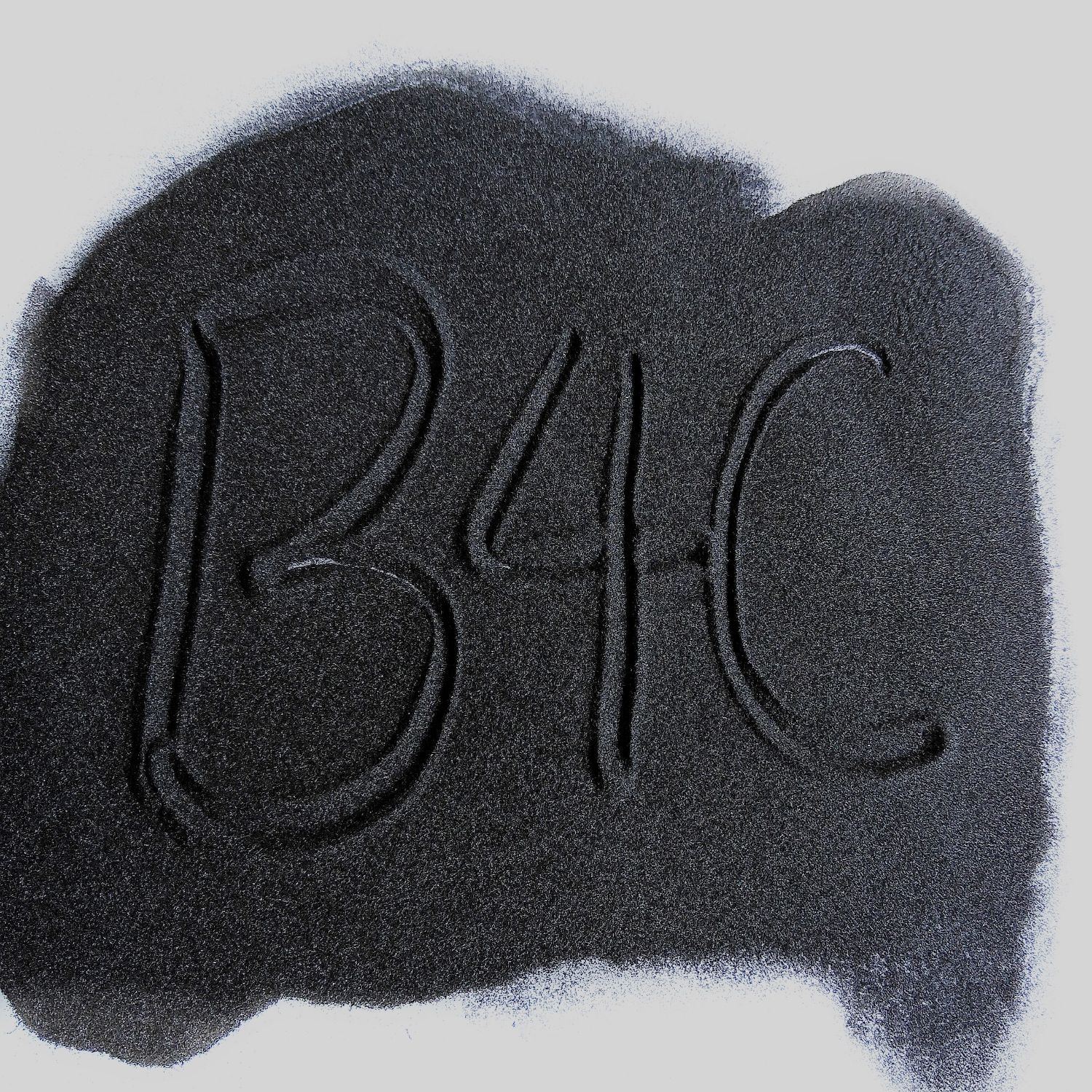
A shift in lot rarely shows up as a clean, uniform change in particle size. More often, the distribution broadens or narrows while the mean barely moves, so a D50 that looks stable on paper can hide a tail of fines or oversize that alters how the powder settles, flows, or dissolves. For pigments, that might mean the same nominal grade suddenly rubs out with more visible speckles; for a pharmaceutical, a slower dissolution profile even though the median diameter hasn't budged.
The causes are usually mundane but cumulative: a different ore seam, a rebuilt mill rotor, slightly less effective classification on a humid week, or even a new operator's habit of cleaning the cyclone differently. Each of these nudges the size distribution in a way that can go unnoticed until a downstream step complains. A batch that passes its internal specification may still perform differently because specifications often capture only one or two points on the curve, not the shape between them.
Watching for lot-to-lot drift means looking beyond the certificate's headline number. Overlaying full distributions from several recent lots, checking the D10 and D90 instead of just the median, and asking whether the material was milled or precipitated can reveal whether a change is a real process shift or just measurement noise. If a supplier changes their upstream source without telling you, the particle size fingerprint is often the first place that secret shows up.
Their Oxygen Control Tells You More Than a Purity Certificate
A purity certificate can claim 99.999% oxygen, but it says nothing about how that oxygen behaves when it actually reaches your process. Real control happens in the delivery, the pressure stability, the flow consistency, and the response when demand spikes. Those are the variables that decide whether your oxidation step runs flawlessly or drifts into scrap territory.
Oxygen control is about the whole chain — from the storage tank to the final regulator. Sensor drift, line contamination, or a poorly sized vaporizer can turn a perfectly pure gas into an unpredictable feed. Operators who rely only on paperwork often miss the slow degradation in delivery performance until it shows up as off-spec product.
The tools that matter are mass flow controllers with live feedback, pressure transducers at the point of use, and routine cross-checks against an independent analyzer. Purity certificates are a snapshot of the source; oxygen control is a continuous measurement of what your process actually sees. If you can’t prove the oxygen is onde spec at the nozzle, the certificate is just a piece of paper.
Ask About Sintering Results From Real Customers, Not Just Specs
When you're comparing sintering vendors, the spec sheets all start to look the same—similar density ranges, similar hardness numbers, similar tolerances. What they won't tell you is how those parts behave after a few thousand cycles, or whether the microstructure holds up under thermal shock. Ask for real customer contacts and call them. You'll hear about things like batch-to-batch consistency, surface finish after secondary machining, and whether the parts actually fit without rework.
A sintered component can pass every lab test on paper and still cause headaches on your assembly line. Maybe the edges chip more than expected, or the dimensional drift shows up only after heat treatment. Real customers who've used the parts for a year or more can give you the unfiltered story—what failed, what needed adjusting, and whether the supplier was responsive when issues came up. That kind of detail never appears in a brochure.
Don't settle for "we can hit that density." Push harder: "Which of your current customers is doing something like this, and can I talk to them?" If the answer is vague or they fall back on theoretical projections, that's a red flag. A confident sintering partner will hand you a list of references and case studies without hesitation, because they know real-world results speak louder than any data sheet.
How They Package and Store Powder Affects Your Pressing Line
Powder arriving at your facility is rarely in the same condition as when it left the supplier. The way a material is bagged, drummed, or super-sacked—and how long it sits in a warehouse—changes its flow properties before you ever open a valve. Moisture uptake from humid air, settling from vibration during transit, and even the type of liner used can turn a free-flowing powder into a cohesive mass that bridges in the hopper or sticks to punch faces. Paying attention to incoming packaging condition and storage rotation is not a housekeeping detail; it is the first quality checkpoint for your pressing operation.
Different packaging formats create distinct challenges on the press floor. Small bags are convenient for batch weighing but introduce more air and variation between scoops. Rigid intermediate bulk containers minimize handling yet often compress the powder at the bottom, requiring a de-agglomeration step before filling the feed shoe. Even the film used inside a drum matters: some liners shed static charge, causing fines to cling and later release unevenly. Instead of blaming the press for inconsistent tablet weight or capping, check whether the powder’s storage history is rewriting its own spec sheet.
A practical approach starts with mapping how long each lot sits between delivery and use. First-in, first-out rotation is obvious, but also note the temperature swings near exterior walls or loading docks. If a powder spends nights in a cold area and mornings in a warm production room, condensation forms on the container walls and migrates into the material. Simple fixes—like keeping pallets off concrete floors, resealing partially used bags with desiccant, and staging powder in the press room for several hours before opening—can smooth out density fluctuations and reduce the need for constant feeder adjustments. Consistency at the press begins with how you treat the powder before it ever reaches the tooling.
Can They Keep Carbon-to-Boron Ratio Steady at Scale?
Scaling any synthesis route from a bench-top reactor to multi-kilogram batches usually exposes hidden variables, and the carbon-to-boron ratio is one of the first to drift. Small thermal gradients, uneven precursor mixing, or differences in gas flow dynamics that barely matter in a 100-mL crucible become dominant once vessel dimensions grow. Operators often find that a ratio locked at 4:1 in the lab creeps toward 3.8:1 or 4.2:1 on the plant floor, not because the chemistry changed, but because heat and mass transfer did.
Maintaining that ratio at scale demands more than tighter feedstock specs. Inline monitoring of off-gas composition, real-time temperature mapping across the reaction zone, and automated trim feeding of the boron source are common countermeasures. Some teams also segment the heating profile to mimic the thermal history of smaller batches, while others accept a slightly wider tolerance band and adjust downstream purification instead. The choice usually comes down to whether the final application can tolerate a small stoichiometric offset without losing hardness, oxidation resistance, or electronic properties.
If the ratio cannot be held within specification, the consequences show up late — after sintering, after coating, after device integration. A boron-rich batch may become too brittle, while a carbon-rich batch can lose the very characteristics that justified the material choice. This is why pilot-scale trials focus less on proving the chemistry and more on proving that the process control strategy survives contact with real equipment. Those who solve the ratio problem early tend to be the ones who reach full production without quietly redesigning their material.
FAQ
Free boron, free carbon, and residual B2O3 are the usual troublemakers. Ask for a wet chemistry report instead of a generic purity claim, because trace oxides can change sintering behavior and final density more than the headline boron carbide percentage suggests.
Request the full D10/D50/D90 curve plus a SEM image from the actual production lot. A single average number hides bimodal distributions, and a micrograph quickly exposes irregular shapes or satellite fines that will hurt packing and pressing.
Ask for lot-specific certificates that include not just chemistry but also tap density and BET surface area. If the supplier cannot trace those numbers to a specific milling campaign, you are likely dealing with a reseller who cannot guarantee repeat supply.
A single excellent sample is easy; repeating it across months of production is hard. When downstream armor or nuclear components are qualified on a fixed recipe, even small shifts in particle shape or surface oxidation can force requalification.
They should ask about your sintering method, target density, binder system, and whether you need coarse or submicron grades. If a supplier quotes a price before understanding your process, that is a red flag.
Send them a realistic problem, such as a pressing defect or low green density, and see if they respond with process suggestions rather than a new quote. A partner who asks about your tooling and pressing pressure understands that B4C is not a drop-in powder.
Custom cuts can reduce waste when your process has a narrow tolerance band, but they only make sense if the supplier runs pilot batches and shares both the sieve data and the yield loss. Otherwise you pay extra for a blend that drifts after the first container.
Compare the cost per qualified part, not per kilogram. A slightly higher powder price is often cheaper than re-qualifying a new lot, adjusting sintering curves, or scrapping ceramic tiles due to inconsistent hardness.
Conclusion
Before you sign anything with a boron carbide supplier, run a trial batch using the exact grade you intend to buy—not a similar lot they happen to have on hand. This single step exposes more about their process control than any datasheet ever will. Pay close attention to how their particle size distribution shifts from one lot to the next. If the mean diameter drifts noticeably between deliveries, your pressing and sintering parameters will need constant adjustment, which quietly eats into yield. Equally telling is their oxygen control. A purity certificate may claim 99% B4C, but a slightly elevated oxygen content can change how the powder compacts and reacts during sintering, leading to porosity or weak grain boundaries you won't see until after firing.
Go beyond specs and ask for sintering results from real customers who process the same grade at a similar scale. A supplier that can't point to consistent, repeatable densification data from actual production runs is guessing, not guaranteeing. Don't overlook packaging and storage either. Boron carbide powder that picks up moisture or clumps during shipment or warehousing will feed unevenly into your pressing line, causing density variation in green parts. Finally, pin them down on carbon-to-boron ratio stability at scale. Small fluctuations in this ratio alter hardness and fracture toughness in the finished ceramic. If they can't hold that ratio tight batch after batch, the powder may be fine for abrasive grit but not for precision armor or nuclear applications.
Contact Us
Contact Person: Junting Leo
Email: [email protected]
Tel/WhatsApp: +86 18615009766
Website: https://www.huayimaterial-china.com/