

Aromatic Carbonyl Intermediate CDMO: Your Trusted Partner for Custom Synthesis Solutions
2026-10-19
Every aromatic carbonyl intermediate carries its own selectivity puzzle—one that can stall a synthesis route for weeks if the chemistry isn't handled with care. DSL Chemicals approaches these challenges as a CDMO partner, not just a supplier, designing custom routes that scale from lab to production without losing yield or purity. Here’s a closer look at how that focus changes the outcome for your next project.
Aromatic Carbonyl Chemistry That Doesn't Compromise on Purity
Working with aromatic carbonyl compounds often means accepting trace impurities as an unavoidable trade-off. But does it have to be that way? The ketones and aldehydes we supply are built around a different approach: rigorous purification at every stage, so the chemistry you run starts from a clean baseline. No mysterious side products from leftover starting material, no silent interference from metal residues. Just the reactivity you expect, without the hidden variables that can derail a sensitive synthesis.
We pay particular attention to the qualities that matter in real lab work. Each batch is checked for not only assay and water content, but also for those stubborn impurities that don't always show up on a standard spec sheet—things like isomeric contamination or peroxide accumulation in older stock. The result is an aromatic carbonyl that behaves predictably, whether you're using it in a Friedel-Crafts acylation, a Grignard addition, or a late-stage functionalization where purity is non-negotiable.
What does that mean for your day-to-day work? Fewer repurifications, less troubleshooting, and more confidence that the outcome reflects your design rather than the reagent's history. Aromatic carbonyl chemistry is already powerful; removing the purity variable simply lets that power show up where it should—in the product, not in the frustration.
Scaling Custom Intermediates Without Losing the Chemistry You Started With
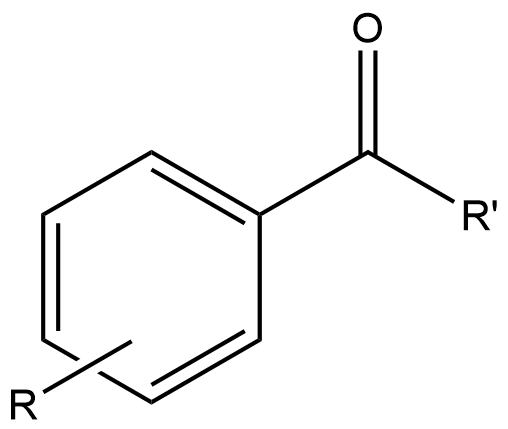
Moving a custom intermediate from bench scale to pilot or production often feels like re-running the entire discovery campaign. The subtle selectivity that gave you a clean 92% yield in a 50 mL flask can vanish when the same recipe hits a 200 L reactor, leaving behind new impurities and a frustrated process team. Most of the time, the problem isn't the chemistry itself but the way heat transfer, mixing efficiency, and reagent addition profiles shift as vessel geometry changes. A reaction that relied on a fast, localized temperature spike to push a sluggish step forward may stall completely in a larger, better-cooled system. The key is to identify which parameters actually control the outcome before you scale, not after you've burned through a batch of expensive starting material.
One practical approach is to deliberately stress-test the small-scale procedure under conditions that mimic the worst-case scenarios of a large reactor. For example, slow the addition of a sensitive reagent from seconds to minutes, reduce stirring speed to a gentle swirl, or hold the mixture at an intermediate temperature for an extra hour. If the product profile degrades under these perturbations, you've found a scale-sensitive step. Fixing it might mean switching to a more robust catalyst, adjusting the order of addition, or introducing an in-situ quenching agent. The goal is to build a process window wide enough to tolerate normal variation in plant equipment. A narrow sweet spot that works only in a jacketed lab flask isn't a process; it's a lucky accident.
Finally, don't underestimate the value of a well-chosen surrogate impurity study. As custom intermediates scale, minor byproducts from early steps can concentrate or react downstream in ways that never appeared at smaller volumes. Spiking a lab batch with 1–2% of the likely impurity and carrying it through the next two transformations can reveal whether that impurity gets purged, transformed into something separable, or builds up to unacceptable levels. This kind of forensics work takes time, but it's far cheaper than discovering a new, stubborn contaminant in a 500 kg campaign. The chemistry you started with can absolutely survive the journey to production scale, provided you treat scale-up as an engineering translation problem rather than a simple multiplication of reagent quantities.
Process Routes Designed Around Your Timeline, Not Our Convenience
We've all dealt with processes that force you to wait for a callback during "business hours" or demand that you complete steps in an order that makes sense only to the company. Our approach flips that: every stage of the route is mapped against your actual availability, not ours.
That might mean splitting a review into a quick call on Tuesday evening and a document check on Saturday morning. It could look like holding a milestone open while you're on vacation, then picking up exactly where you left off without repeating a single step. The sequence adapts to your pace.
What you won't find is a rigid checklist that assumes everyone works nine-to-five or clones the same timeline for every client. Instead, you'll see a working rhythm that bends around real life—because convenience shouldn't be a luxury reserved for the people running the process.
When Reactive Carbonyls Demand More Than a Standard Recipe
Most synthetic routes treat aldehydes and ketones as predictable electrophiles, but certain reactive carbonyls refuse to behave. Electron-poor systems, strained rings, or alpha-heteroatom-substituted variants can push standard conditions past their limits, leading to side reactions, over-addition, or stubbornly low yields. When a textbook Grignard or simple reduction fails to deliver, the problem often lies in overlooked electronic or steric factors that a generic protocol never addresses.
Take trifluoromethyl ketones or alpha,beta-unsaturated aldehydes: their carbonyls sit in environments that alter nucleophilic attack geometry and rate. A standard sodium borohydride reduction may generate complex mixtures, while organolithium additions can trigger enolization or single-electron transfer pathways instead of clean 1,2-addition. Here, switching to milder hydride sources, using Lewis acid tuning, or employing a two-step activation sequence can rescue the transformation without resorting to exotic reagents.
The real difference comes from diagnosing the failure mode. Is the carbonyl polarized unusually? Does the substrate tautomerize or form hydrates that resist attack? Sometimes the answer is as simple as lowering temperature or changing solvent to slow down competing pathways. Other times, protecting the carbonyl as a temporary adduct or using an umpolung strategy flips the reactivity entirely. Reactive carbonyls don't need a longer recipe—they need a smarter one.
From First Gram to Multi-Kilo: The Same Rigor Throughout
Scaling a reaction from a few grams to multiple kilos isn't a simple matter of multiplying reagent amounts. Solvent volumes shift, heat transfer changes, and impurities that never appeared at small scale suddenly become stubborn. We treat every batch with the same analytical scrutiny—HPLC traces, residual solvent checks, and stability data are collected whether it's a 5-gram exploratory run or a 20-kilo campaign.
That consistency comes from keeping the same team on the project from route scouting through production. The chemist who ran the first milligram-scale coupling is the one reviewing the kilo-scale batch record. It's slower than handing off to a separate process group, but it preserves the small decisions that don't always make it into a formal report.
Partnership Built on Transparent Communication and Realistic Timelines
True collaboration starts with honest conversations. From the initial kickoff to final delivery, we keep every channel open—no hidden bottlenecks, no sugar-coated updates. Each phase is discussed in plain language, so you always know what’s happening, what’s next, and what might need adjustment. When timelines shift (and in real projects, they sometimes do), you hear it from us first, with context and a plan already in motion.
Our timelines are built around your actual capacity and business rhythms, not a generic sprint template. We map deliverables to milestones that make sense for your team, leaving room for feedback loops and internal reviews. This means fewer rushed approvals and more thoughtful iterations. Instead of promising the impossible, we anchor every date in the team’s real velocity and your availability—so progress feels steady and predictable.
The result is a working relationship where surprises are rare and trust is the default. You’ll never have to chase us for a status update or decode vague progress reports. Instead, you get a partner who treats your deadlines as seriously as you do, communicates in plain terms, and adjusts with professionalism when life happens. That’s how we turn a project plan into a long-term partnership.
FAQ
We routinely produce substituted benzaldehydes, acetophenones, benzophenones, and heteroaromatic carbonyl derivatives. Many of these carry sensitive groups like nitro, halogen, or boronic ester functionalities, so our synthetic routes are designed to avoid harsh conditions that could cause unwanted side reactions.
We start with a route scouting phase where two or three viable pathways are evaluated in parallel. You receive a short technical memo comparing yield, purity, cost of goods, and scalability before we commit to a specific route. This avoids locking you into a chemistry that only works at gram scale.
Yes. Our kilo lab and pilot plant include jacketed reactors capable of maintaining -80°C, along with Schlenk lines and gloveboxes for organometallic steps. We have run multi-kilogram batches of Grignard and lithiation-based carbonylations without compromising yield or safety.
Beyond a standard certificate of analysis, you get a full batch record, residual solvent data by GC-headspace, ICP-MS metals screening if your project requires it, and a stability summary under recommended storage conditions. We also share deviation reports proactively, even for minor excursions.
Your route, process know-how, and analytical methods remain entirely yours. We work under a master service agreement with clear IP assignment clauses, and our chemists sign individual confidentiality obligations for each project. No background IP from our side is imposed on your final product.
For a target that requires route development, expect 6 to 10 weeks from kickoff to delivery of the first 100-gram batch. If you already have a proven synthetic route and only need scale-up, we can often ship 1-5 kilograms within 3 to 4 weeks after raw material receipt.
Absolutely. Many projects come to us because a published or lab-scale route shows poor selectivity or dangerous exotherms when scaled. We redesign the process around safer reagents, better solvent systems, or catalytic alternatives, then demonstrate reproducibility in three consecutive validation batches before transferring tech to your site or our plant.
We keep a dedicated process chemist assigned to your molecule, not just a project manager. That chemist reviews every batch trend, updates control limits for critical impurities, and stays involved through tech transfer. Our raw material sourcing also uses dual qualification for key starting materials, so a supplier disruption does not change your intermediate's impurity profile.
Conclusion
When you hand off an aromatic carbonyl intermediate, you are not just outsourcing a reaction. You are placing a bet on whether the carbonyl stays intact through workup, whether the regiochemistry survives scale-up, and whether the purity profile you approved in the lab still holds at multi-kilo batch. This CDMO team treats those concerns as the core of the project, not as afterthoughts. Their aromatic carbonyl chemistry is built around preserving reactive functionality without chasing yield at the expense of purity. Scale-up is not a new chemistry problem here; the route is designed from day one to move from bench to pilot without changing the selectivity you validated. Timelines are planned around your milestones, not shifted to fit an internal schedule. If a shorter hold time or a different workup keeps the carbonyl intact, they build the process around that constraint rather than forcing a generic template.
Reactive carbonyls rarely behave like textbook substrates, and this group does not pretend otherwise. They plan for side reactions, moisture sensitivity, and thermal instability before the first gram is weighed. The same analytical rigor applied to a 5 g batch follows the project to 5 kg, so there is no drift in impurity profile or color or assay as the vessel size changes. Communication is direct: if a solvent swap will add two days but prevent degradation, they say so early and with enough context to make a decision. There is no hidden queue or optimistic turnaround. The result is a CDMO relationship that feels less like a vendor and more like a process group embedded in your own lab, one that understands aromatic carbonyl intermediates are rarely forgiving and plans accordingly.
Contact Us
Contact Person: Wei Zhang
Email: [email protected]
Tel/WhatsApp: 862163529955
Website: https://www.dslchem.com